




You Are Already The Expert. Now Build Like It: On worth, new systems, indigenous knowledge, and the future women are building toward with Vanessa Roanhorse
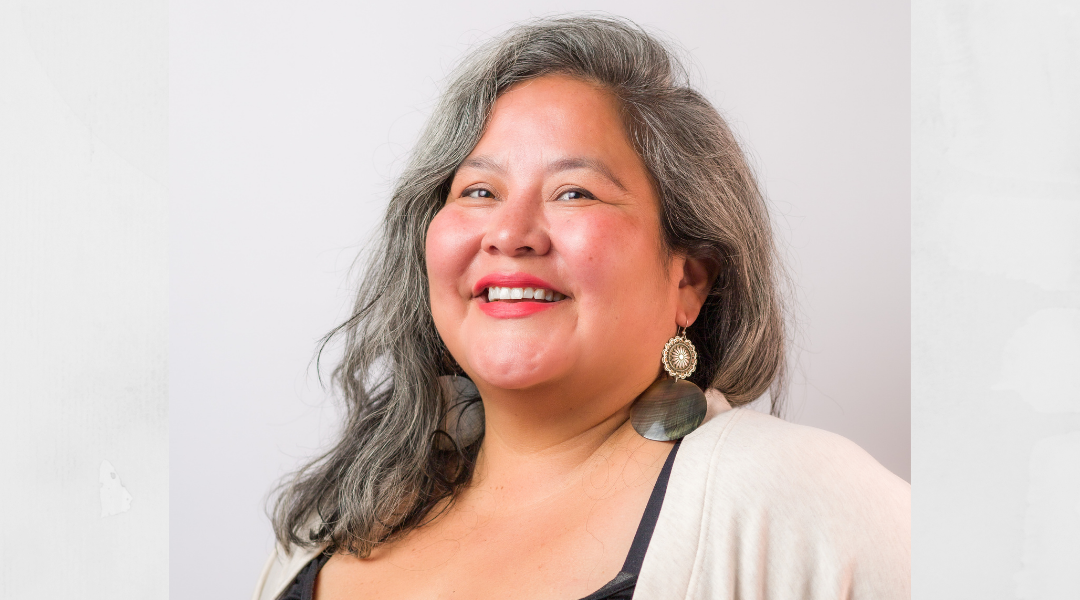
Hey Well Woman!
There's something I keep seeing happen to women doing meaningful work.
They get good at it, really good, and then they undercharge for it, hide it inside a structure that wasn't built for it, or wait for someone else to confirm what they already know. They do the work. They just don't fully own it.
I've watched it happen over the years on this show. And if I'm honest, I've done it myself.
That's exactly why I wanted this conversation.
Vanessa Roanhorse spent ten years doing something about that. First in her own business, then in the capital systems she's been redesigning ever since. Her work is about making sure that what people know, what communities have always known, is treated as an asset. Not a charity. Not a niche. An asset.
When she sat down with me on The Well Woman Show, she brought the kind of clarity that makes you want to go back and renegotiate something.
Who is Vanessa Roanhorse?
Vanessa is the CEO of Roanhorse Consulting and Return on Indigenous Studios, a for-profit social enterprise rooted in Indigenous knowledge that she describes as an Indigenous ecosystem architecture firm.
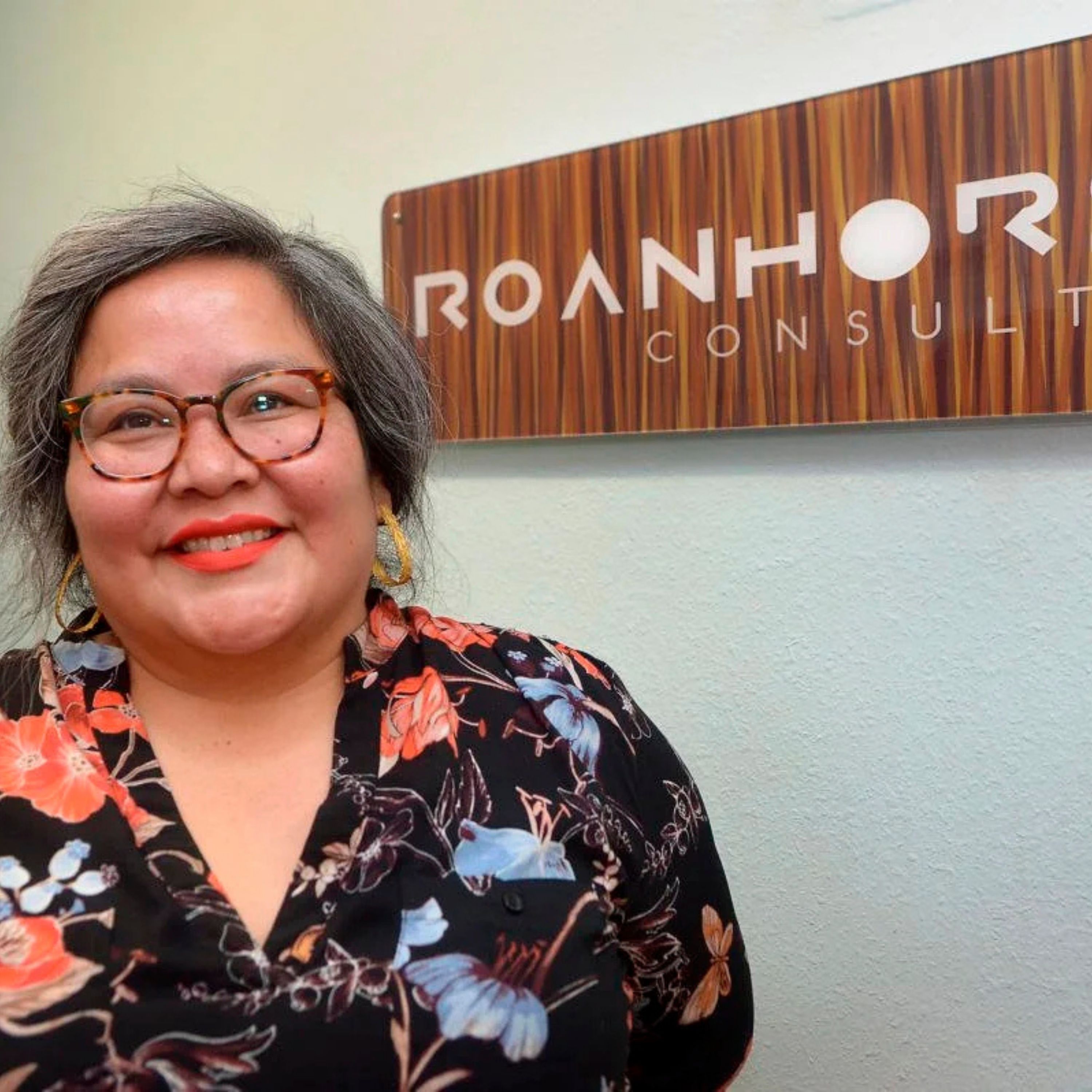
A citizen of the Navajo Nation, she started her business in 2016 trying to close her own personal wealth gap, with no financial background and no roadmap. Just relationships and a willingness to keep asking why.
Over the next decade she designed relationship-based lending models, helped credit unions and CDFIs push against the limits of traditional risk assessment, and launched a studio that takes community-centered business ideas from concept to full capitalization.
What she built is significant. How she built it is the lesson.
The For-profit Decision Nobody Talks About Honestly
When we do work at the intersection of social good and income, the unspoken expectation is: put it in a nonprofit. It signals that your intentions are pure. That you're not in it for yourself.
Vanessa built a for-profit social enterprise instead, and she's clear about why.
“We often fall into the nonprofit sector because in the way it's legally developed, it feels like it's the only place where we can do good, with our wisdom and our knowledge. When really, that is not true and we have to flip the script.” - Vanessa Roanhorse
Her reasoning is both practical and principled. A financially sustainable business, one with a diverse portfolio, not dependent on a single funding stream, is a healthy ecosystem. And the Indigenous worldviews, methodologies, and ancestral knowledge at the center of her work are assets worth thousands of years of lived experience.
If you have wondered whether doing meaningful work and building real financial stability can coexist, Vanessa's ten years are a direct answer.
They can. And if we keep pretending they can't, we are the ones paying for it.
✨ The Well Woman Principle: Ease is how we lead and ease doesn't come from shrinking your work to make it feel acceptable. It comes from building structures that actually hold what you carry. When you stop forcing your expertise into containers that weren't built for it, something opens up.
The Question That Changed Everything
The shift that defined Roanhorse Consulting wasn't a pivot. It was a question.
In the early years, Vanessa's clients came with clear requests: a strategic plan, a theory of change, a program that serves this community. And somewhere in the work, she started asking not just what — but why.
Who is this for? How will you know if it's working? What does success look like for the people it's meant to serve?
“That piece of what we started asking changed the way we worked.” - Vanessa Roanhorse
It turned advisory into collaboration. It turned deliverables into something more durable. And when she shared this with me, I immediately thought about how many of us are moving so fast through our work that we've stopped asking ourselves the same thing.
When did you last ask yourself why, about the work in front of you right now? That answer is worth more than your next strategy session.
✨ The Well Woman Principle: Self-trust is how we know and knowing your own why is how you access it. When you strip away the external expectations and ask what actually matters to you, the noise quiets. That is not a small thing. That is the compass.
Relationships Are Not Soft. They Are The Infrastructure.
I have been saying this on this show for ten years. And hearing Vanessa say it from a completely different vantage point (from inside capital systems, from inside Indigenous community frameworks) made it land in a new way for me.
“Everything functions because of relationships. I don't care what people say about AI. Relationships allow us to dream, and problem solve, and work through loneliness and sadness.” - Vanessa Roanhorse
This is not a new idea. It is an ancient one. Indigenous knowledge systems have always understood that healthy communities are built on kinship, reciprocity, and the long-term tending of relationships. Not transactions, not scale, not individual achievement.
What Vanessa has done is bring that understanding directly into capital systems, into the rooms where investment decisions are made, and make the case that relationship-based underwriting is not just more equitable, it is more accurate. It better reflects how value actually moves.
This is how Roanhorse Consulting was built. Not through a platform or a growth strategy, but through a decade of conversations, partnerships, and trust built one relationship at a time. When I asked her how she stays grounded during politically chaotic times, her answer came back to the same place: double down on your networks. Return to your people. Find what's yours to do and protect.
That's the long-term strategy. Not the loudest response but the most rooted one.
The relationships you are tending right now are not networking. They are infrastructure. And they will outlast every broken system around them.
✨ The Well Woman Principle: Impact is how we serve and the most durable impact is not built at scale. It is built in rooms, in relationships, in the quiet and consistent work of showing up for the people you've said matter to you. That is how new systems grow roots deep enough to hold.
The Messy Middle Nobody Shows You
One of the things I most wanted to make sure we said out loud in this conversation is this: behind every polished outcome is a decade of figuring it out.
Vanessa has had a personal therapist. Couples therapy. Coaches and mentors. She has questioned herself more times than she can count. And at the end of 2023, she stepped away from an organization she co-founded; a decision that was painful in ways she doesn't minimize.
She came out of that grief with something she hadn't had before. Not confidence. Clarity.
“When that thing didn't work out, that's when I was like, I know what I'm doing. It's not always gonna be perfect, but I understand.” - Vanessa Roanhorse
I shared my own version of this with her. Fifteen years in my business and ten years of building this show, and from the outside it looks easy: the logo, the guests, the momentum. Behind it is angst, falling apart, putting it back together, figuring it out in real time. The mess is not the obstacle. It is the work.
If you are somewhere in the middle of your own long game, feeling the gap between what you're showing the world and what's actually happening behind the scenes, I want you to know: that gap is not evidence that something is wrong. It is evidence that you are building something real.
✨ The Well Woman Principle: Self-trust is how we know and self-trust is not about feeling ready. Vanessa didn't wait until she felt ready. She built, questioned, fell apart a little, and rebuilt. That is what arriving at your own knowing actually looks like. Every woman in the messy middle is already doing it.
Name What You're Building Toward
I asked Vanessa what success looks like to her. Her answer was simple.
“Success is that I work so hard so that I could live in my full eldership. Just be available. Teach if I'm asked. Be with my grandchildren if I have them. Spend time with my partner, my sister, my friends.” - Vanessa Roanhorse
She wants presence. Freedom. A season of life where her job is simply to be available. Not performing, not producing, not building. Just there.
I told her I don't hear women leaders name this enough. And she knows why: we can't picture ourselves actually getting to rest. So, we don't plan for it. We don't work toward it. We just keep building.
So, I want to ask you directly: what does your version of full elderhood look like? Not a retirement plan but a vision. A destination you are designing right now, with every choice you make about your work, your relationships, your structure.
You deserve to know what you're working toward. And once you name it, I promise everything else gets clearer.
✨ The Well Woman Principle: Joy is how we sustain and joy is not just what we feel while we're building. It's what we're building toward. Naming your version of elderhood is not indulgent. It is one of the most practical things you can do for the decisions you'll make this week.
Vanessa Roanhorse is building something the economic mainstream doesn't have a category for yet. And that's exactly the point. This conversation will shift how you think about your worth, your work, and what you're really working toward.
I'm so glad you're here for it.
Below is the full transcript of our conversation, lightly edited for clarity.
Meet Vanessa Roanhorse
Giovanna Rossi: I'm speaking with Vanessa Roanhorse. Welcome to the program!
Vanessa Roanhorse: Thank you so much, Giovanna. It's such a pleasure to be here.
Giovanna Rossi: I'm so excited to get you here. I say get you here because it's taken a while, and I just think timing is everything, and we are, you know, women with like, multiple roles, juggling all the things, and so, it's just really, really great to have you on the show, Vanessa. And so, I want to start by having you share with listeners, who are you in the world today?
Vanessa Roanhorse: Sure thing. I just want to say it took us both having 10-year anniversaries of our bodies of work to bring us together, so, you know, in all due time.
Giovanna Rossi: That's right.
Vanessa Roanhorse: So, you know, my name's Vanessa. I am Navajo, I grew up on the Navajo Nation, where my family, most of my family still resides, and I live here in Albuquerque, New Mexico. But really, I think probably the most, one of the bigger things in my life is that I'm a mother of now 12-year-old, and been in partnership with my person for nearly 20 years, which is wild how quickly time has come.
Vanessa Roanhorse: And, as of this year, have been a business owner of a for-profit social enterprise called Roanhorse Consulting which, I started in 2016 as a way to figure out how to close my personal individual wealth gap. And the consulting firm really kind of came from relationships. I was looking for work. I was struggling to find work in New Mexico. I had been living in Chicago for 15 years prior, just doing a variety of things, and work didn't come easy. And so through networks and partnerships, I was able to lend a contract with the City of Albuquerque, which led me to wonder and question how capital moved.
How people with great ideas are missed, and then also how these systems of economics and money coming from an Indigenous worldview. What I was really interested in is, like, how are we centering our whole relationship to the world around us, and how is money as a tool supposed to facilitate that, not be the primary driver. And I think that really has been sort of the questions I've grappled with for a very long time.
Giovanna Rossi: Yeah, I mean, that is your body of work, right? So, congratulations, first of all. Thank you on that 10-year anniversary. I know. It's a big deal. It's a big deal, because, you've sustained not only yourself and your family, but your whole team. You have, like, quite a large team working on all of these projects with you.
Building a For-Profit Social Enterprise
Giovanna Rossi: And so, I just want to back up and kind of, dig into a few things that you said, because we do have a lot of listeners who may be wondering, like, well, maybe I should start a for-profit social enterprise. And I also want to just reflect and put in context that, a lot of times when we are working on, “social justice issues”, or issues that may usually be in the nonprofit space in this mainstream society, we often undersell ourselves as experts and professionals, and so to see you take your work into a for-profit social enterprise space is just really inspiring. And so I just want to hear a little bit about how you made that decision, and like what advice would you give others?
Vanessa Roanhorse: I mean, truthfully, I think so much of it in the beginning really was just needing some kind of legal container that could allow me to pay my bills and do the things I knew how to do. But really, that was only the first couple years. It was probably at a point where, when I started to really think about the purpose of these legal structures, the purpose of these legal entities, I started to actually understand that right now, the kinds of businesses that we are asked to build are primarily rested in these two ideas that we get to make as much money as we want.
And do good and do whatever the work is, or we have to structure it in a nonprofit which, supposed to have community governance, like, that's why you do it. It's supposed to return back to community, but long-term, on both sides, it felt like we weren't asking ourselves better questions around how we should be structuring businesses to be financially sustainable and to be financially sustainable means that you are not reliant on one type of funding. That you should have a diversity, a diverse portfolio, because diversity in any ecosystem is a healthy ecosystem.
Vanessa Roanhorse: But for some reason, we have bifurcated this idea that businesses that have social good, businesses that are looking at social justice, businesses that are looking at environmental justice, at human rights, that these are things that we fundamentally should not be able to have financial sustainability, when really, if we're actually thinking about what it is we need to be doing, what we should be doing is touching every part of the ecosystem with these concepts, with these framings. And for me, Roanhorse Consulting and centering our Indigenous worldviews, not only just our view, but our methodologies and practices, that is worth something.
And it is. It is not just worth it because of the deep knowledge we bring, but these are people's entire lived experiences. These are, like, some of these are ancestral learnings, thousands of years. For us not to acknowledge the value of these things that we do, it feels like it de-emphasizes the power of our knowledge and our wisdom, but also that we're only allowed to commodify it through philanthropy.
Vanessa Roanhorse: And only if we say that it is only valuable if we are addressing a vulnerability. It's really an asset framing, from my point of view. And I know that's a lot of information, but I think when we think about the kinds of work we want to do, we often fall into the nonprofit sector because in the way it's legally developed, it feels like it's the only place where we can do good, with our wisdom and our knowledge. When really, that is not true, and we have to flip the script because the last thing I'll say is, like, it is women from every community that is starting businesses faster, that is running organizations that are creating more psychological safety. That is ensuring we're investing in women, children, and their caretakers, and their families. And we're the ones running the majority of the nonprofits in the United States. So, we're not creating true financial safety, sustainability, or self-determination in this.
Building New Systems, Not Participating in Old Ones
Giovanna Rossi: Yeah. Oh my gosh, there's so much there, and so, Vanessa, when you talk about building new systems, right? Not just participating in old systems. Are you scaling this so that you can teach other people these new systems? Or, like, how are you viewing the intersection or the integration of the old or, like, dominant culture systems with the newer systems, which aren't really new, because they come from a long history of like your history and culture and years of wisdom, right? So, how do you see those things?
Vanessa Roanhorse: You know, it's been a journey to figure out what it was we've been doing. I'm not gonna lie, like, I don't think… We started as a consulting firm. Pretty basic, you know, A plus B equals C. But what I found was that work we were asking questions and approaching the work so differently than a lot of folks, and as an Indigenous woman who does not come from a financial background, I had a lot of learning. I had a huge learning curve to understand what it looked like. And so, in some ways, like, the first 5 years was just me learning, and reaching out to people, and learning with them, and learning from them. But also looking around and being like, this isn't working. Why isn't this working?
And in that process of the first 5 years just learning, that's when I think I shifted from just being a consulting advisory firm to realizing that what we were doing with partners was asking them, these are our clients, what is it you're trying to do? And everyone would be like, it's a strategic plan, it's a theory of change. I'm trying to create a program that does X plus, you know, that serves community members in this part of the country.
Vanessa Roanhorse: But when you really sat down with them, you were like, but why?
That piece of what we started asking changed the way we worked. And I don't think we've been a consulting firm, traditional consulting firm most of the 10 years we've been here. But I can say we are the kind of organization who wants to work with you to figure out not just your why, but who is this for? And if we're doing this for other people, how do we know? And so that to me, has been the fundamental shift for us, in terms of what we do, and why in our tenure we have incubated new businesses, new concepts and ideas, and we've rolled them out into the ecosystem. Because part of what we saw is it's really hard to test new ideas and build new things when you're within an institution, you're within an existing organizational infrastructure, or it doesn't fit in your traditional business model. And so, through learning, co-building, testing, failing, trying again, we have found that, like, where our ability to teach and open the sector to more people, more ideas, has been to just constantly be out there asking the questions and inviting people in.
Vanessa Roanhorse: And we have done that in so many different capacities, from creating new capital mechanisms that use relationship-based underwriting and criteria, to supporting larger institutions, credit unions, and CDFIs to push against their boundaries of risk and underwriting to developing, evaluation frameworks that support community health first. And these are all parts of the system, and in 2024, we launched our studio, Return on Indigenous because at this point, we have enough information across our ecosystem to understand what we believe we can do the most, which is identify strong business concepts that don't exist to serve Indigenous people and all people, but using Indigenous knowledge to essentially get them from idea to launch to fully capitalization, so that they can build their solution for the next generation.
And so that's why I say we're moving from consulting advisory to more of an Indigenous ecosystem architecture firm. And that's really our sweet spot.
Giovanna Rossi: Wow, that's so amazing, I'm like, whoa. That's just really amazing, and thank you for giving the specific examples of, like, the relationship-based financial loans, I think you said? The relationship-based part.
Vanessa Roanhorse: Yeah.
How to Embed New Systems So They Last
Giovanna Rossi: And so how do you think, Vanessa, that you can embed these things so deep that they can't just be, oh, when this program's over, it's gone, kind of thing. Like, especially in the current political climate, and I know you and I have talked about this, and sort of like, how do you, you know, gather the wisdom and the knowledge and the learnings so that it becomes the central way… the way of doing things.
Vanessa Roanhorse: Yeah. So, I think that, like, it's a mind shift change, you know what I mean? Like, I think as Indigenous people in the United States, like, I don't think we have ever fundamentally bought into the American Dream to begin with. And so, our version of the worst possible thing that could happen has happened. And we've spent the last hundreds of years trying to refine our way, rebuild our knowledge systems, our wisdom systems, our cultural practices, our language, just trying to find new ways to connect to it all.
But in that process of the worst thing that could ever have happened has already happened to you, we also remember the times when we had to hold our knowledge and our wisdom and store it away for a time when we could be loud and sharing it again, and replanting these ideas, and ensuring these roots are so deep.
Vanessa Roanhorse: And sometimes it's caretaking the space and the lens that you're in. Sometimes it's hiding the wisdoms and knowledge where they need to go. But I can say that, like, from my perspective, we're in a such a great time of shift, and nobody wants to see people get hurt, nobody wants to see how things are shaking out. But I do think this work and these conversations, it's so important that we look at the things we've created, and those things that have roots, and those things that need to be protected, concepts, you know. The way we have come back around to be like, you know, love is love, right? Like, these concepts, these like, important mind shifts, these are the things we have to protect, and these are the things we have to hold onto. This idea of rematration, which is really rebuilding your relationship with the earth around you, is one definition.
Vanessa Roanhorse: For us, it's about doubling down on these concepts and looking at our networks, our partners, and our community members. And trying to figure out how do we continue to underwrite and support them, and for those wisdoms and knowledges that can't stay where they are for different reasons, where do they need to go?
Giovanna Rossi: Hmm.
Vanessa Roanhorse: I would never assume What we have made here won't change, because things have to change. What I can say, though, is that we are articulating a concept around risk. This idea around who gets how do we define capital? It's not doesn't just have to be money. But also that the nature of capitalism itself hasn't just, like, not worked, it's failing us so drastically, and I don't think most people deny that anymore, at least in the US. But that, like, what we're offering, that's like the small boat on a tributary that's not going where the rest of this river is rushing towards.
And we're not alone, you know? I think when you ask about, how do we get through these times? How do you know this work will continue and not just get subsumed by the socio-political nightmare and echo chamber and the loudness of it all?
It's because the more people I see returning to community, returning to acknowledging that, like, people matter, relationships matter, that, like, that's really where the long-term strategy lives. And the things we're offering today are the many solutions to the bigger realities.
Vanessa Roanhorse: And we're not alone, it's a movement. There are tons of organizations and people and leaders and communities that have been actively doing this. And it's not like we have to create anything new. It's here. I think the difference is we have to do some conceding, which is, I may not get everything I want, but I'll get everything I need. And that's a very different mind shift change for this country.
Finding What's Yours to Do - How to stay grounded and purposeful when the world feels chaotic
Giovanna Rossi: Yeah, and so are you focus on other people also being able to say that? Because I'm just gonna say, like, you know, it's great that we can get to the place where we could say that like, I may not get everything I want, but I have what I need.
But meanwhile, the dominant culture people running a lot of the big systems are they saying that? And, like, what is you know, at some point, our role is not to try to fix them, right? We're building new systems that they can either come along or not, and so what do you say about that?
Vanessa Roanhorse: You know, I feel like it's not my job to change those people's minds. And I only say that because I am not convinced that folks doing the things that they're doing don't know they're doing it and aren't doing it with all the wisdom and knowledge in front of them. They have made choices and truthfully, they continue to make those same choices. So, it's not about changing their mind or revealing to them some secret thing to humanity. It's that we are all human beings, and they've decided these things are most important to them, and they don't care.
I think the real change and the real voice is obviously our young people. It’s sitting and talking and spending time with our young people. It's us acknowledging we have a toxic relationship with social media and buying things, and purchasing things, and that we individually have to be making those individual choices to change how we spend our days. And I'm included in that.
And when I think about where my voice can matter the most, it's not on TV, it's not in these big, public spaces. My work matters when I can sit in a room with investors, philanthropic partners, and folks who are developing and drafting policies that are going to impact the way people get capital, money, to do the things they want to do.
Vanessa Roanhorse: I feel like that's where my greatest opportunity is, is to provide examples. Show them that this isn't just possible, but we're doing it. But it's also to remind folks who have such power that, like we are in this together, so I think that's where I try to spend most of my time, and then with my son, and with his friends when they stop calling me Unk.
I don't know, you know, I think everyone has a place. Like, you have this beautiful podcast, and you've been storytelling and telling things that people haven't heard. And to me, that's just as important. It's so important that we can go to places and hear folks who normally wouldn't have a platform. That's like, long-standing to me, is these stories are gonna live a long time.
Relationships as the Foundation of Everything
Giovanna Rossi: Yeah. Yeah, and that's all dependent upon relationships, which is what you already mentioned, right? Like, we have to stay in relationship in order to tell somebody the story, right? In order to have somebody to tell. And also, I just want to say, and then we're going to take a break and do the final segment, but what helps me right now in this kind of chaos that we're in is to, like, really double down on relationships, on grounding myself in the good work that I know. And looking for what's mine to do and what's mine to contribute, and that might not be what yours is to contribute. Obviously, it's different, you know? And when I do that, it feels a little less crazy.
Vanessa Roanhorse: Yeah.
Giovanna Rossi: And so, does that resonate with you?
Vanessa Roanhorse: I mean, it does, because, like, you know, I think the times we're living in are maddening, but they're, like, orchestrated, manufactured maddening, because of the way the world is around us. And for how long capitalism told us that this is a solo journey. It's a winner-takes-all journey. It is a scale to infinite size with no consequence belief. It's just all that stuff, right? Just the values. So, to me, I think what you're naming is we have to remind ourselves that everything functions because of relationships. I don't care what people say about AI, you know.
We actually have to have relationships with one another to be able to actually take care and do the things we want to do. But also, relationships allow us to dream, and problem solve, and work through loneliness and sadness. Like, these are all how kinship and relationship circles work.
Because at the end of the day, like, I think we have more shared values as human beings than we don't. And so, I spend a lot of time thinking about the value systems that we're all holding, and I do think we have a lot more in common.
Vanessa Roanhorse: And I just find that you can't talk about value systems and shared value, which means shared outcomes, which means shared versions of a future that looks the way we want it to look, if you don't have relationships, you know? And this is, like, ancient stuff, like you know, the other day, my team and I were talking about how shame had a place in community. Shame was one of those things that kept people from acting out. There's nothing wrong. It's about what you do. Just like conflict. There's nothing wrong with conflict. It's about what you do with conflict. You know, it's like what you do. Why does shame exist? What is the purpose of it? And I think we've just forgotten that because we've gotten to this whole fake modesty, fake, like, neighborliness.
But behind the scenes, it's like we're not doing any of that stuff. I would rather have someone tell me if there was a conflict, I have a problem with you, I think you're X, Y, and Z, because you know what, at least I understand where they're coming from. And it's either something I want to work and resolve, or it's something where I'm like, okay, fine, I don't want this relationship.
Giovanna Rossi: Right.
Vanessa Roanhorse: Anyways, yeah.
Giovanna Rossi: Yeah, okay, I'm speaking with Vanessa Roanhorse, CEO of Roanhorse Consulting, a for-profit social enterprise, and we'll be right back.
Superpowers for Success
Giovanna Rossi: We're back on the Well Woman Show with CEO Vanessa Roanhorse. CEO of the for-profit social enterprise Roanhorse Consulting. We've been talking about a whole lot, basically her body of work for the last 10 years, and we're going into the segment Superpowers for Success, where we do a quick round of questions, Vanessa, that really allows listeners to get to know you as a leader and a person. And so, the first question for you is, what does success in life mean to you?
Vanessa Roanhorse: Success in life means that I spend my middle age doing what I'm doing, so that in my elder age I am doing anything I want. I'm with whoever I want, I'm wherever I want. I'm just enjoying being an elder and returning wisdom and knowledge back to the people. I'm also gonna enjoy being an elder where I'll say whatever I want, however I want. And that I have the resources and the safety nets to allow me to live exactly how I want to live. It's not to say I don't now, but it's like, I've got to drive, and I just want to be at a place in my older age where my job is just to be available.
Giovanna Rossi: Mmm…
Vanessa Roanhorse: Provide my thoughts and input. Teach if I'm asked. But just be available. And if I have grandchildren, be with them and spend time with my partner, and my sister, and my friends. Like, that's to me, success is that I work so hard so that I could live in my full eldership.
Giovanna Rossi: Mmm, I love that. Yeah, and hopefully it's less exhausting.
Vanessa Roanhorse: Yeah, I shouldn't be at all. I mean, I should be having the best time.
Giovanna Rossi: Because I heard what you said about driving, and, like, we are in that driver's seat mode, building, building mode, right? And that's great, that's where we need to be. But I love that you're seeing the future for yourself, because I don't hear that a lot from women leaders, and I think other women need to hear that, like, oh, that's what we're working toward, right? We're not just gonna be working, building in the driver's seat forever. Like, this is gonna come to some sort of conclusion at some point.
Okay, when did you know you were really good at what you do, Vanessa?
Vanessa Roanhorse: One thing I want to add about the elder thing is the reason I think we don't talk about it is because we don't see us being able to relax and have time to ourselves, and so I really want that for women in particular. We deserve it, like, just like everybody does. But.
Giovanna Rossi: Yeah, yeah.
Vanessa Roanhorse: Honestly, like, this has been…running a business and doing the work we do has been a journey of working through my own anxieties and personal issues. I've had a personal therapist. I've had couple therapy. I've had coaches. I've had mentors. Because everything about this work just forces you to question, like, am I the right person? Am I the expert? Do I have enough knowledge and wisdom to know this is the right path? Like, the good thing is I've always trusted my gut, but I had to work through all of that. So, I would say, really, I feel like I finally have come into my understanding of this work probably the end of 2023 where I had to step away from an organization I co-founded, and it was very painful.
But stepping away was the most important thing I could do at the time for my own personal health, my own, like, mental health. And also, I think, for the work that I was trying to build. And it was me stepping away and working through that grief, and asking myself what I could have done better, that I came out on the other end of it, being like, that this was the best possible thing, and all the things I did up to that point were now part of this, like, better way of being and working.
Because I do think we don't know how good we are until we've had failures, or we couldn't do something, or something didn't end up the way we wanted. And I think we live in a culture where we're supposed to hate ourselves because of that. Instead, it's probably the greatest lesson, teaching tool of my life has been when things didn't work out.
Vanessa Roanhorse: So, for me, when that thing didn't work out, that's when I was like,
holy shit, I know what I'm doing. I know what I'm doing. It's not always gonna be perfect, but I understand. And now I'm starting a whole another venture, which has put me right back at the bottom of the learning. If there's a learning stairwell, I'm right back there again, but at least I'm building off of something.
Giovanna Rossi: Yeah, oh, I love that. And plus, you are a creative and I think you thrive in creation mode, right? Creation and.
Vanessa Roanhorse: Yeah. Or chaos, if you talk to my sister. Either way, yeah.
Giovanna Rossi: Yeah, but that really resonates with me about your journey over the years, because I feel like everything I do in my business, which I've had for 15 years, and then this show for 10 years, everything is, like I don't know, like, I make it look easy, right? Like, oh, this looks great, look at this fun logo, and we're doing this talk, and everything, but in the background, it's all this angst, and like, really figuring out, and you know, falling apart, and then putting it back together, and there's all this messiness, right? And that's what I just kind of want to say, like, I hear you, and I'm just echoing that, because we want to make sure we include the messy and all the stuff that happens in the background in order for us to show up in the spaces that we show up.
Vanessa Roanhorse: Yeah. I mean 15 years of your own business, 10 years of a very successful podcast, like, you know, you've achieved success probably over and over and over again. It's just you keep honing it, and it gets bigger, and then you see more gaps and opportunities, so you address them, and that gets bigger. And then it's a whole other body of work or ideas that you're like, great, now I gotta learn about that. But I think it's the curiosity that you're discussing, to me which is why I think, like, when do you know you're good at this? It's just like, I don't know. Sometimes I have a realization, but then for the most part, I follow my curiosity. As long as this continues to feel good, I'm doing something right.
Giovanna Rossi: Hmm.
Vanessa Roanhorse: When it stops feeling good, which is why I'd leave the other organization, that's when we should be listening to ourselves, because you've done this so well. And I would say, for sure, from someone from the outside, you're incredibly successful. You know, you've done something, and you're talking to people from all over the world. I think you're in your flow. I think you're in the water, and it's good, the temperature's warm, and you're just running with it. And to me, that's exciting, and that feels like success.
Giovanna Rossi: Oh my gosh, thank you, Vanessa. It's really great to have this conversation, because I think we hear different things in our conversation here, and so I really appreciate that, and yeah, it is kind of amazing that we're here. But, I want to ask you a couple other questions as we round out this segment. What superpower did you discover you had, only to realize it was there all the time?
Vanessa Roanhorse: I don't know if I should say this, everyone will know. Just kidding.
My gut read on people has never let me down. So, I'm very careful with it, meaning if people ask me because, you know, you get calls from people being like, hey, so-and-so reached out to me, do you know anything about this person? I have to be very judicious, very thoughtful, very careful, but I can honestly say my read on people and my gut reaction to people has never been wrong.
Giovanna Rossi: Mmm.
Vanessa Roanhorse: And I always thought it was because when I was growing up, there was just so much stuff constantly happening that I had to learn. My therapist said I had to learn how to be a… I had to, like, read the room really quickly.
Giovanna Rossi: Oh, yeah.
Vanessa Roanhorse: So that's one of them, but I think, now as I hit my, you know, I'm 48 now, I've been working really hard to be like, that might have been how it started, but now I'm gonna own it. It's not just gonna be out of safety and fear. Now I'm gonna own it from a place of, like curiosity, excitement, protection, and understanding. Because I think when I was younger, it was a skill and a tool that I needed to survive, and I always, at some point in your life, those skills, you have to start to acknowledge when they no longer serve you, and what's going to serve you into the future. And for me, I had to reconcile that superpower, because I wasn't here to use it because I was scared. I was here because I need to change my relationship with it. So, it's one of those things I didn't understand, and I don't think I liked in the beginning, but now I'm like, I'm very careful with it, conscientious of it, but I trust my gut.
Giovanna Rossi: Oh, okay, do you think that you didn't like it at the beginning because you identify more as a linear, like, strategic person, and that was too like, vague and like, emotional or whatever, however you want to describe it.
Vanessa Roanhorse: No, that's actually a really good one. I wish I had considered that. No, not at all. It's because, I used that to assume I could make people happy and please them.
Giovanna Rossi: Oh, okay.
Vanessa Roanhorse: So, instead of just dealing with what was in front of me, with understanding how my superpower worked, I used it to try to fix and address people's stuff, and the truth is, nobody's asking you to do that. It's not anyone's responsibility. Also, no one can make anyone happy. And then third, I think it caused me a lot of grief when I couldn't address something, and instead of it. So it just… it was, like, self-harming, you know? It was like I was creating the conditions for failure, but also really weird ego ideas that I was capable of doing these things. So that was really…and it happened across my whole life, personal, professional, I was seeing it causing problems.
Giovanna Rossi: Yeah.
Vanessa Roanhorse: And I was like, what? Why isn't this… and that's, you know, therapy. Think out of a therapy.
Giovanna Rossi: Yeah. Well, it's so interesting to talk about this, because I think of it as… well, I use the word intuition. Right? And in the Well Woman framework, and a lot of listeners will resonate with this, you know, there's a whole part of the framework which is, like, really tuning in to gut, as you would say, and to your intuitive knowing, like, just the knowledge that's there. So, thank you for, kind of, really diving into that.
Just a couple of last questions. What advice would you give your younger self, say, 25-year-old Vanessa?
Vanessa Roanhorse: I think I would just tell myself, like, you're good, you're gonna figure it out keep enjoying your life. Because I can honestly say, I didn't get my stuff… my life together until I was, like 32. But I can tell you now, at 48, I have no regrets. I had so much fun as a young person. Like, I had so many jobs, I had traveled. I had so many wonderful friend groups. I made mistakes and I worked in so many different sectors, so by the time I landed as a parent and this company, which I was raising two babies at the same time.
I wasn't looking over my shoulder, I wasn't looking for something new, like, I was focused, and I was ready. So honestly, I would just tell myself at 25, like.
You got this, keep going, enjoy.
I mean, I don't know, you know, I just…
Giovanna Rossi: Yeah.
Vanessa Roanhorse: I guess maybe I would have said, build a relationship with working out at the gym when you're younger, so this doesn't suck now at 48.
Giovanna Rossi: Right?
Vanessa Roanhorse: I mean, no, I don't know.
Giovanna Rossi: Yeah, no, I love it. And so, Vanessa, do you identify as a feminist?
Vanessa Roanhorse: Yeah, sure. I mean, I'm a feminist not because I'm a woman, I'm a feminist because I believe all people deserve to have agency, self-determination, and sovereignty over their mind, thoughts, bodies, feelings, and, you know, the way they want to live their life. And I think, for me, feminism is just asking that simple question of humanity, which is to just mind your own business and let us just be, you know what I mean? And to me, like that's the core of it, but I also understand the reason we have to center women in the feminine because we've been pushed out of decision-making circles since time of… since this country and colonization. And historically, women have always held, and gender-expensive women have always held positions of leadership, decision-making, power, and like honor.
Giovanna Rossi: Hmm.
Vanessa Roanhorse: And that's because we are and have always been the caretakers, the land caretakers, the cultural care bearers, you know what I mean? Like, we hold that. And I'm not asking us to get rid of the masculine or men in these places, I'm just saying, rebalance and harmonize. So, for me, I feel like I believe in feminism from this broader perspective, but I believe we do have to activate it from the lens of returning women and the feminine back to the center of decision-making circles.
Giovanna Rossi: And where does Indigenous practice and wisdom intersect with that.
Vanessa Roanhorse: I mean, most, you know, tribes here in the North America, Turtle Island, we all have some form of matriarchy. In my culture, all four of my clans come from my grandmother's, grandmother’s, grandmother’s, grandmothers, and we are considered the folks who are the caretakers of the land, the animals, the children. We're the ones teaching you how to be a good person, a good Navajo person. It is our job to be there when hard decisions about family have to be made, and to me, it's like so obvious.
Women have always been considered key and part and parcel to when we make any decisions about family and community. Any decisions about the land, any decisions about, you know, where are we going into the future.
It's in every story. You can talk to almost any tribal community, Native community member, Indigenous community member, and they have versions of this. They have a version of what this is. And so, from my perspective, it's like indigenous people, globally, have these stories, you know. And I think where we are today is, I don't want to get all into it but, it's a handful of people's stories that have been imperialistically pushed on all of us.
But that's not who we were. That's not who you… your ancestors, I'm sure, weren't this way either.
Giovanna Rossi: Yeah, my ancestors were witchy-type people.
Vanessa Roanhorse: That's what I'm saying! Oh, my goodness. Yes, exactly.
Giovanna Rossi: Yeah. So, Vanessa, last question for you. What are you reading right now? What's on your nightstand?
Vanessa Roanhorse: I have two things on my nightstand. I'm just looking at them right now. I've started re-thumbing through, MRSA Barad Duren's book, The Caller of Money. It's the history of Black banking in the country, in the United States.
Giovanna Rossi: Ooh.
Vanessa Roanhorse: Yeah. It's a lot. And then another is a book called Practicing Liberation. It's about different thought work thinkers and doers who have been using different modalities to sort of liberate movements, ideas, and organizers. And some of this is just thinking a lot about this moment we're living in, and, like, how do we, like, operationalize liberation within our own lives and our own organizations, but also reminding us that, like, folks have been doing this for hundreds of years, and not to forget our past. You know what I mean? Like, don't forget, like. We all have these gifts, but don't assume you know more until you've honored the people who've been before us.
So those are the two books, and I'll tell you, oh, they're intense. They're intense books right now.
Giovanna Rossi: Oh gosh, those are such good recommendations. Our listeners always like to read, and know what our guests are reading, and so I actually really want to read that second book. And Vanessa… oh, there it is, Practicing Liberation, okay. We'll put that on the list, and
Vanessa Roanhorse: I'll send it to you.
Giovanna Rossi: Share it, yeah. And Vanessa, it's been such a pleasure having you on the show today.
Vanessa Roanhorse: Thank you for the invite. I, you know, we had to wait 10 years for this, but hopefully not much longer.
Giovanna Rossi: That's right. Thanks, Vanessa.
Vanessa Roanhorse: Appreciate you.