




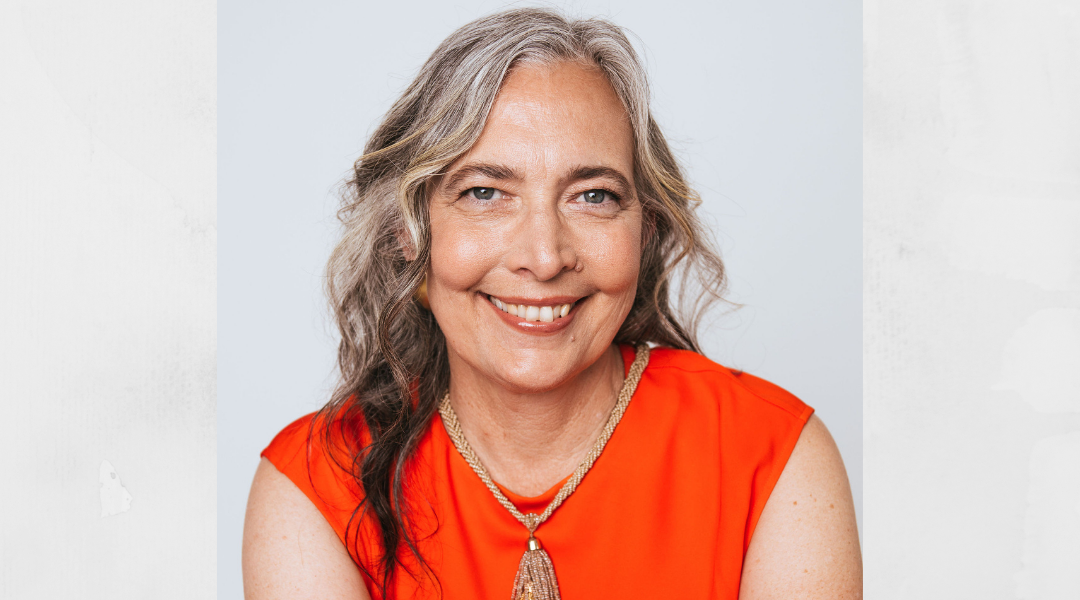
The Hidden Experience of ADHD in Women with Dr. Jennifer Dall
Hey Well Woman!
Think about the last time someone called you "too sensitive," "too scattered," or "too much."
Now think about how many other times you've heard some version of that same thing, going all the way back to childhood. Enough times that it stopped sounding like an opinion and started sounding like a fact about who you are.
For a lot of women, that fact was never true. It was ADHD in women, showing up quietly, unnamed, for decades.
That's the conversation I had with Dr. Jennifer Dall, founder of ADHD Holistically, on this month's episode of The Well Woman Show. If you've ever wondered whether your forgetfulness, sensitivity, or "too much" energy was actually undiagnosed ADHD, this conversation is for you.
Watch Dr. Dall's interview - Part 1
Meet the Woman Behind ADHD Holistically
Dr. Dall is a Grief-Informed Neurodivergence Specialist and founder of ADHD Holistically, where she works with women navigating ADHD alongside grief, trauma, autism, and everything else life adds on top, what she calls "ADHD +1".
She's also the founder of Curveball Press, home to her books Shake Up Your Life and The ADHD 3-Day Sprint. She's a former educator, a mother, an empty nester, and a widow who now brings a grief-informed lens to her work.
Her core insight reframes a lifetime of small self-criticisms: the reason so many women with ADHD went undiagnosed isn't that the condition wasn't there. It's that research and diagnostic criteria were never built around what ADHD actually looks like in women.
"Their hyperactivity is more in their brain, so it's an internal thing versus the external. And so, people weren't looking at it." - Dr. Jennifer Dall
Why This Work Exists
Before we got into the specifics, Dr. Dall named the mission underneath all of it: bringing awareness to a topic that's never had enough of it.
"If you read something, if you work with me and any little nugget resonates with you, and it helps you to take some steps forward, understand yourself better, work a little bit better, be happier, then that's what it's about." - Dr. Jennifer Dall
✨ The Well Woman Principle: Impact is how we serve. Impact doesn't require reaching everyone. It requires one nugget landing with one woman at the right moment, and Dr. Dall has built her entire practice around exactly that scale of change.
Why ADHD in Women Went Unnamed for So Long
The numbers alone are worth pausing on. Dr. Dall points to CDC figures suggesting roughly 16% of the population has been diagnosed with ADHD, and notes that's just a subset of who's actually living with it. The picture most of us were handed (an eight-year-old boy who couldn't sit still) was never built to catch the version that shows up in girls and women.
That mismatch had consequences.
"A lot of times, women when we were girls, or even as women, I find that some of the issues were written off as, say, personality problems. You're forgetful, you're lazy, you are defiant. And so, for so long, I believe that for women, it wasn't even an option. No one really thought about ADHD in women in that way." - Dr. Jennifer Dall
And when women did seek help, the diagnosis often landed somewhere else entirely, labeled as depression or anxiety, with ADHD in women never entering the conversation.
Also, I think that part of why ADHD is missed is because a pattern we already know well: women have historically been left out of a lot of research altogether, so even in the decades when ADHD was actively being studied, women may not have been part of those early studies at all.
Common Women's ADHD Symptoms (That Often Get Missed)
Dr. Dall is careful to note there's no single presentation. It shows up differently in everyone, which is part of why it stayed hidden for so long. Common women's ADHD symptoms include:
- Chronic forgetfulness and disorganization
- Heightened rejection sensitivity
- Emotional intensity that gets dismissed as "too much"
- Internal restlessness that isn't visible from the outside
"If you deal with rejection and sensitivity, if you deal with that kind of stuff, it really hurts, and it can really send you off for the whole day." - Dr. Jennifer Dall
ADHD Masking: The Skill Women Never Meant to Learn
Dr. Dall's own recognition of her ADHD didn't come easily, despite years spent teaching students with the exact same traits.
The more she learned, the more she started to wonder if the same things were going on with her. When she brought it up with people she trusted, the response was disbelief.
"They would say, no, no, you couldn't possibly, you've gotten degrees, you have a family, you're managing your life, you have a job." - Dr. Jennifer Dall
Her answer for why she'd managed so well anyway was direct.
"Because we've been masking, and we've learned how to do it." - Dr. Jennifer Dall
It took a moment she didn't expect, watching a student in her own classroom, to break through.
"I was looking at her, and I realized so much, like, this is me. This is me, when I was in middle school." - Dr. Jennifer Dall
From there, she went to her doctor with something most women don't have the chance to gather: real research, real information, and enough self-advocacy to make her case.
✨ The Well Woman Principle: Self-trust is how we know. Dr. Dall's story is a reminder that trusting your own understanding of your life can, and often does, come before anyone else confirms it.
Do You Need an ADHD Diagnosis?
I asked Dr. Dall directly what the benefit of a formal adult ADHD diagnosis actually is, given how much time, money, and effort it can take. Her answer held both sides at once.
"A benefit of a diagnosis is, should you want to take ADHD medication or explore that, you can then get it. It can also be kind of a validation. Once I finally had somebody else validate it, I understood more about myself." - Dr. Jennifer Dall
But she's clear that a diagnosis isn't the only valid starting point.
"Getting a diagnosis can just give you more solid information, but it's also, I don't think it's necessary. If you see traits, if you believe this is what's going on, then you can work on managing it, managing your life with it, and learning to live." - Dr. Jennifer Dall
For anyone wondering if this sounds familiar, Dr. Dall offered a simple gut check rather than a checklist: has this been going on your whole life, whether or not it was ever named?
Rebuilding Structure Without a Classroom
One of the more unexpected parts of our conversation was how much Dr. Dall credits her years in education, not for the content, but for the structure.
"I knew when to eat, and I knew when to go to the bathroom, and I knew my calendar, and I could work within that structure." - Dr. Jennifer Dall
When she left to start her own business, that scaffolding disappeared, and she's still figuring out how to make all the parts work without it.
"When I quit and started running my own business, this is something I'm still figuring out how to make all these parts work without that outer structure. But then also trying to get to the point where I enjoy it and I'm okay with it." - Dr. Jennifer Dall
✨ The Well Woman Principle: Ease is how we lead. Ease doesn't mean having no structure. It means being honest about what kind of structure your brain actually needs, and giving yourself permission to rebuild it on your own terms.
ADHD plus Grief: When They Show Up Together
Dr. Dall also brings a grief-informed approach to her work, shaped by losing her husband about four years ago. Rather than treating ADHD and grief as separate problems to manage one at a time, she describes them as forces that move through the body together.
"Whether it's ADHD or not, you have certain ways of processing. And grief, if you've been talking about this, it also impacts how you feel, and how you process, and how you react, and how you move through the world." - Dr. Jennifer Dall
She speaks from direct experience.
"I know that when my husband died, so you know, with ADHD I have a lot of things I'm doing, a lot of things to keep track of. And life throws a lot of other things at you, so all of a sudden, there's a lot more that you have to keep track of and take care of, and do." - Dr. Jennifer Dall
Her guidance for anyone in that overlap comes down to grace.
"Understanding and giving yourself grace that they're impacting each other, and that they both deserve to be seen, you need to bring kindness to yourself." - Dr. Jennifer Dall
A Two-Minute ADHD-Friendly Exercise You Can Try Today
Dr. Dall's book Shake Up Your Life offers small, low-effort ways to interrupt old patterns, and she walked us through one example on the show: a tiny adventure walk.
"You only have a few free minutes. Step outside, walk around, and notice things that are different in your world, something that you've never noticed. Stay open to what you notice. A shop you want to return to, a community space you didn't know existed, a path worth exploring another day." - Dr. Jennifer Dall
It's not a diagnosis, and it's not a treatment plan. It's a small act of paying attention to yourself, which for a lot of women managing ADHD is the part that got skipped for far too long.
Dr. Dall also pointed to the relief of hearing your own experience reflected back in someone else's story.
"I find that I like it best when I've heard somebody else's story and it resonated with me. I think I've learned the best. I think that that's helped form the community, really." - Dr. Jennifer Dall
✨ The Well Woman Principle: Joy is how we sustain. There's a particular kind of joy in finally hearing your own experience in someone else's words; the relief of "me too" after years of assuming you were the only one.
Watch Dr. Dall's interview - Part 2 (Superpowers for Success)
Below is the full transcript of our conversation, lightly edited for clarity.
Meet Dr. Jennifer Dall
Giovanna Rossi: Alright, welcome to the show, Dr. Jennifer Dall.
Jen Dall: Thank you, Giovanna! I'm so happy to be here and have this chance to talk to you.
Giovanna Rossi: Yes, it's exciting to talk to someone who is so entirely focused on women and ADHD and just topics that we're not really used to hearing about in the mainstream a lot. So, before we get into it, I would love for you to just tell listeners, who are you in the world today?
Jen D: Who am I today? Well, that's an interesting question. I'm Dr. Jennifer Dall. I have a business, and my main business is ADHD Holistically, which is working with women with ADHD, what I call ADHD plus one. So that's how everything else seems to mix in with the ADHD. So, whether it's autism, or trauma, or stress, or a learning disability, or just life, it all adds on to the ADHD
Jen D: Many of us did not know when we were growing up what was going on because it hasn't been talked about and it hasn't been researched. I also started my own independent press called Curveball Press, where I am in the process of starting out with some of my books and then expanding, so more of an arm for the business where you can get books, workbooks, more printed information about ADHD and life, and all of that.
Giovanna Rossi: Well, we are definitely going to talk about your work a lot today, but I want to just give you the opportunity to share anything else about how you identify in the world, like, besides your titles and job, job. Like, do you want to share anything else about yourself?
Jen D: Sure, I am a mother, an empty nester. My daughter is in law school. She's gonna be going into her last year. She's in the other part of the state. I am a widow. My husband died about 4 years ago. I am a former educator. I left that to start my own business. I like to read. I'm a dog mom, and my baby is right next to me on the couch. I like to read. I also write fiction, and I live in the Los Angeles area, and I love to just explore and tell people about all the great things here.
Giovanna Rossi: Awesome. Okay, good. I feel like I have a much bigger sense of you and who you are. And so, Jen, I'd love to hear you explain a little bit about how your work impacts women, and particularly, improving the health and well-being of women as we live our busy lives and have multiple roles in the world and doing so much. I'm always interested in speaking to women who are really taking a leadership role in some area that really impacts us, and I think that is what drew me to your work, so if you want to just talk a bit about that.
Jen D: Sure, thank you, that's a great question. I think that one of the biggest things that I do is bring awareness. You know, as we've been growing up, as we are getting older, as we are going through this world, like you said, these aren't topics that are talked about a lot. Not a lot of people know things about ADHD, about being a woman, and so my goal, my plan is to go out and talk about it and share and help people learn more things. I find that I like it best when I've heard somebody else's story and it's resonated with me.
Jen D: I think I've learned the best. I think that that's helped form the community, really. Just because we're able to talk about things, and we know what each other's talking about. I may not know exactly your situation with ADHD or grief or anything like that, but I know that there's another woman who's been through something, and the fact that she's been through and is going through something, I think is a good point to connect, to see each other, to validate each other, to just say, hey, I see you and I want to hear from you, and we're all okay.
Why are we still missing ADHD in women
Giovanna Rossi: Okay, so let's understand a bit about ADHD. That's really the focus of your work and you integrate that with a grief-informed process, and so forth, but just for folks listening who may not really know that much about ADHD, especially in women, how big is this? How widespread is this? Like, how many women have ADHD? And how did we not know about this earlier?
Jen D: So, I've seen numbers from the CDC that they're talking about, like, 16% of the population being diagnosed, which that's just a subset of it. A lot of women haven't been diagnosed. How did we not know? Because, well, for so long, when you talked about ADHD, you thought about, like, the 8-year-old boy who was all over the place. And a lot of women, in their expression of ADHD, it's more internal. It’s more reserved. Their hyperactivity is more in their brain, so it's an internal thing versus the external. And so, people weren't looking at it. They weren't looking - doctors, researchers, weren't looking at it, weren't talking about it.
Jen D: A lot of times, women when we were girls, or even as women, I find that some of the issues were written off as, say, personality problems. You're forgetful, you're lazy, you are defiant, you know, frustration with teachers and parents when they don't understand how you can do so well in something that you're interested in, and so absolutely not well, and not care about things that you don't care about, that you're not interested in. And so, for so long, I believe that for women, it wasn't even an option. No one really thought about ADHD in women in that way.
Jen D: And it was only with time, and I think more stories, and more people coming out, and research changing, that they started to find out more about women and ADHD and the way it can express. And the way it can also be mixed with other things. Some women have gone to the doctor with symptoms and it's been labeled as depression or anxiety, other things, which it may still be, but ADHD isn't looked at. So, that's part of the big problem with just getting the word out and validating each other and our experiences.
Giovanna Rossi: Yeah, and I just want to say for listeners, you know, and I've talked about this on the show, we know that women weren't included in a lot of research historically. And, so even if ADHD was being studied, women may not have been included in those studies early on, and so now, hopefully they are being included and will have some good data. But, that just for context, I wanted to share that. And Dr. Dall, I'd love to hear, how does it show up? You said, like, forgetfulness or like, internal hyperactivity, so how does it manifest? And also, how did you figure out that you had ADHD? Like, what was that process like? Tell us about that.
How ADHD shows up differently in women + Masking
Jen D: So, starting with how it manifests, something to remember is that it shows up in everyone a little bit differently, so it's not that you're going to look exactly like somebody else. It can show up in forgetfulness, in organization issues, in rejection sensitivity, in emotionals. It's something that we're really learning a lot. You may have been somebody who was told a lot, you're so emotional, because something that somebody else thinks is a very small issue, if you deal with rejection and sensitivity, if you deal with that kind of stuff, it really hurts, and it can really send you off for the whole day. All of those things are ways that ADHD can show up, and you can still be the impulsive, hyperactive type. But what we talk about is, like, they just didn't look at women, they just didn't look at girls.
Jen D: For me, I worked in education, and I taught students with learning disabilities and ADHD for part of my time. And I took all kinds of classes, and the more we learned and I learned about ADHD, the more I started to wonder if this wasn't what was going on. These strange things with me. And so, it went through a phase also where I would ask people who I thought should know, and they would say, no, no, you couldn't possibly, you've gotten degrees, you have a family, you're managing your life, you have a job, which I know a lot of women here.
Jen D: Because we've been masking, and we've learned how to do it. And so it was over time, and I think one of the final straws for me was I had a student, a girl, who I just, one day, I was looking at her, and I realized so much, like, this is me. This is me, when I was in middle school. And I just went to my doctor, and I was like, look, we've had all these conversations. We need to really look at it and these are all the reasons. So, I had information. I had research. I had anecdotal information for myself and I was able to go and advocate for myself, but I know for a lot of people it's hard. And the whole process, if you do want to actually get a diagnosis, can be time-consuming and expensive, and another thing to do.
What a diagnosis gives you and why it’s not always necessary
Giovanna Rossi: And what is the benefit of getting a diagnosis, actually?
Jen D: So, and that's kind of contradiction, you know, people say both sides, so a benefit of a diagnosis is, should you want to take ADHD medication or explore that, you can then get it. It can also be kind of a validation. So, once I finally learned and had somebody else validate it, I understood more. I understood more about myself. So that can be a whole process of actually learning what's been going on your whole life, because, you know, when you've had ADHD and you don't know it, you've been told stories and you tell yourself stories about what's going on.
Jen D: So, getting a diagnosis can just give you more solid information, but it's also, I don't think it's necessary. If you see traits, if you believe this is what's going on, then you can work on managing it, managing your life with it, and learning to live.
Giovanna Rossi: Okay and if folks are listening thinking, well, that sounds a little bit like me, what are a few things they could ask themselves, or we could ask them on the show here, to kind of pinpoint, not that we're going to diagnose anybody on the show, but just to give somebody an idea of maybe, yeah, maybe you want to look into this.
Jen D: So, some of the traits we've talked about, emotional sensitivity, dysregulation, trouble with organization and time, those are all some of the classic areas. And one thing I like to talk to people about is you may not have been diagnosed when you were younger, but if we sit here now and we talk about it, do you realize that this is something that's been going on your whole life whether or not it was identified in any way as having anything to do with ADHD?
Jen D: Like, when I brought up how with, you know, the rejection issues, and when somebody says something to you, it just hurts to make it really a lot. Do you think back to when you were a kid and a teenager, and this is happening a lot? When we talk about issues with time management, is it something that when you're really quiet and you think about it, you've seen it for a long time?
Giovanna Rossi: Okay, and how have you kind of compensated for that, because, you know, you've managed quite well in your life, it seems like. You've got an education, you had a family, you've started a business. And so, what kind of things have you had to, kind of adjust or be aware of in your own life in order to do those things.
How Dr. Dall managed her ADHD and create a life that actually fits
Jen D: So, some of the things I've had to be aware of is… I've had to be aware of the stories that I told myself and was told, and looking at them from a fresh lens. I have had to slow things down and really give myself space to try things. I talk about how, in a certain way, being in education for a great deal of my life actually helped me, because it was very structured. You know with ADHD, like, we have a very odd relationship with structure. It's like, I kind of like it, but I don't like it.
Jen D: But I knew when I was teaching, I knew, like, when to eat, and I knew when to go to the bathroom, and I knew my calendar, and I could work within that structure, and so when I quit and started running my own business, this is something I'm still figuring out how to make all these parts work without that outer structure. But then also trying to get to the point where I enjoy it and I'm okay with it. You know, breaking free of that box, or that room that we've been put in where this is what success means, and finding success outside of it, has been exciting, and it's a journey.
Giovanna Rossi: Yeah, it is. And so, now, you help women who have ADHD, whether they've self-diagnosed, or been diagnosed, it doesn't matter. You work with them to help support them to understand this and what their options are.
Jen D: Yes. Yes. I don't ask for a diagnosis. As far as I'm concerned, if you're listening, if you read something, if you work with me and any little nugget resonates with you, and it helps you to take some steps forward, understand yourself better, work a little bit better, be happier, then that's what it's about.
What a grief-informed approach to ADHD looks like
Giovanna Rossi: And let's talk about the grief-informed part, because we've talked a lot about grief on this show, and what that looks like for women, and how it can impact our lives. And so, what is a grief-informed approach that you use with ADHD? How does that work?
Jen D: It's understanding how the grief brain works, and how that impacts with other things. So, whether it's ADHD or not, you know, you have certain ways of processing. And grief, if you've been talking about this, it also impacts how you feel, and how you process, and how you react, and how you move through the world. And so, whether you're primarily dealing with the ADHD or the grief, understanding that they work together.
Jen D: I know that when my husband died, so you know, with ADHD I have a lot of things I'm doing, a lot of things to keep track of, and when somebody… if your grief is related to death, but also it could be related to, you know, losing a job, other things, life throws a lot of other things at you, so all of a sudden, there's a lot more that you have to keep track of and take care of, and do.
Jen D: And so, understanding and giving yourself grace that they're impacting each other, and that they both deserve to be seen, and you need to bring kindness to yourself. Or if you're talking or working with somebody else, whether it's a friend or anybody who's going through this, understanding that that how impactful all of this is.
Giovanna Rossi: Yeah, it's almost like a, finding new pathways for functioning, and…
Jen D: Yes.
Giovanna Rossi: Surviving, and maybe not just surviving, but thriving, too.
Jen D: Yeah.
Giovanna Rossi: It’s inside of all of your grief and all of everything else.
Jen D: Yeah, yeah, finding new ways, holding onto things, letting go of some things that aren't working, and really figuring out how to honor all those parts of yourself, is what I'd say.
Giovanna Rossi: Yeah, and I'm glad you're creating a space for that, because I think, you know, in our culture, in our society, and I'm in the United States of America, we might have listeners in other cultures and parts of the world, but in this culture, there really is not actually space for really digging into this, and understanding it, and integrating it into our lives.
Giovanna Rossi: Everything is so fast and so busy, and it's not really acceptable to, like, grieve for too long, because why isn't she over it by now? And, you know, all of those things. So, it's great to know that there are these tools and spaces where people can get support. And Jennifer, we're gonna go into a segment called Superpowers for Success that we do at the end of the show here.
Giovanna Rossi: But before we go to that, do you want to share anything about your books? You showed me a couple of books before we started recording. And listeners might be interested in those. We'll also link to those in the show notes.
Dr. Dall’s Books + How to Shake Things Up When You Need a Change: sample exercise
Jen D: Yeah. So, the first two books for Curveball Press. The first one is Shake It Up. I don't have a picture. Shake It Up, 30 tiny experiments to Shake Things Up When You Need a change. And this goes through a range of just really quick, short things that you could do when you just have a minute. It's a little bit more reflective, and things that might take a little bit longer, but looking at ways at re-looking at your life in fun and unique ways.
Giovanna Rossi: Hmm.
Jen D: There's some journaling in there but it's a really great little book. I've done these, I go back to them. The other one is the ADHD 3-Day Sprint. And the sprint is a way that I really like working in that, with my ADHD brain and my grief brain I'm able to pull things together and figure out in a small block what I can actually do. Sometime with ADHD, I will have a whole list. And believe that I can do it all. And so, it really helps to pull things together.
Giovanna Rossi: So, Jen you have the book about the 30 things that people can do. Can you share one of them? Like, could we do something now with listeners?
Jen D: Sure! Let me, let me go to the first little bit. So, this is something you could do if you're listening to this, like, with your earbuds and you're out walking around, or as soon as we're done, a tiny adventure walk. You only have a few free minutes. Step outside, walk around, and notice things that are different in your world, something that you've never noticed. We may take walks even with the dog, and it's the same walk, and it's, you know, you think you know everything, but what kind of things can you notice?
Jen D: Stay open to what you notice. A shop you want to return to, a community space you didn't know existed, a path worth exploring another day. And this kind of thing, you can repeat it endlessly and anywhere. So, these are just a little experiment. Go out and see what you have not noticed before.
Giovanna Rossi: Yeah, shake things up, I love it. Yeah. Okay, we're gonna take a quick break, and we'll be right back with Dr. Jennifer Dall.
Superpowers for Success
Giovanna Rossi: We're back on the show with Dr. Jennifer Dall, and we're talking about ADHD in women. And, Dr. Dall, we're going into the segment called Superpowers for Success, and this is a quick round of questions so that listeners can learn from you about how you live your life and, any wisdom you have to share. And the first question is, what does success in life mean for you?
Jen D: Success in life means making an impact in one person's life.
Giovanna Rossi: I love that.
Giovanna Rossi: And when did you know you were really good at what you do?
Jen D: Oh, I think that's a daily battle. I think I know when I get feedback from other people that something that I said or helped them with really, helped them out. I think that's when I know that I'm good at it.
Giovanna Rossi: Okay, and so I'm just gonna say that would be external validation.
Jen D: Yes.
Giovanna Rossi: Which is totally valid. External validation is valid. But was there a moment, or is there a time when you had that sort of internal knowing of, like, this is my path, this is what I know that I'm good at, and what I want to do?
Jen D: When I reach for the things I talk about. when I re-reach for them and remember them and do them, and they help me feel better, help me get through the day, help me be more successful, that's when I know that this is my truth.
Giovanna Rossi: Love that. And I think that we're all wanting to get there, you know? We all want to connect to that inner knowing and that truth, and so I really appreciate you sharing that. Can you describe a habit that contributes to your own well-being so you can do everything you do in the world?
Jen D: Having quiet time in the morning, getting up and doing a little journal, thought download, something like that with a cup of coffee and my dog in my lap.
Giovanna Rossi: Love that.
Jen D: I can’t start the day without it.
Giovanna Rossi: Yeah. Jen, what superpower did you discover you had only to realize it was there all the time?
Jen D: I'm gonna call it flexible thinking, but the way to come up with all different kinds of answers or solutions, when given the freedom to just kind of freely bounce all the ideas around in my brain. Good ideas, bad ideas, and then finding the ones that work.
Giovanna Rossi: And so, you have had that. You know, that's been a part of who you are, but you didn't realize until recently that that was really a good thing.
Jen D: Yeah, because I think in a lot of situations people might find it annoying, or it's not staying on the track that they want to, or, you know, that they want a quicker, easier answer. Like, but there's so much to choose from.
Giovanna Rossi: I love that, and I just want to call out for the audience, when we talk about these superpowers, you know, we're really talking about this. A lot of times, we're talking about those things that you were maybe criticized for, or you felt weren't quite right about yourself. And then you realize that actually it is one of your greatest strengths.
Jen D: Yeah, this is a great conversation.
Giovanna Rossi: Yeah, yeah, I mean, just knowing that and being able to identify that. It took me a long time to figure those things out, and so I just hope by sharing this on this show, that maybe other women listening, they won't have to struggle so hard to figure those things out.
Giovanna Rossi: Okay, a couple last questions for you. What advice would you give your younger self, say, 25-year-old Jen?
Jen D: I would tell 25-year-old Jen to follow your dreams, and believe in yourself.
Giovanna Rossi: Hmm.
Jen D: That you're not broken.
Giovanna Rossi: Yeah. That's a good one. She may not have listened, right? But…
Jen D: No, she may not have. And that's what's sad, is that when I was 25, you know, we didn't have all this.
Giovanna Rossi: Yeah. Yeah.
Giovanna Rossi: Jen, do you identify as a feminist?
Giovanna Rossi: What does that mean for you in your work? Like, just in what you offer to women in the world?
Jen D: To me, that means believing in women, and our power, and our knowledge, and our right to believe in all those things, and to figure ourselves out and move forward, and make definitions that aren't determined by I guess, for lack of a better word, the patriarchy. You know, especially when we're talking about advocating for yourself in the medical field or anything like that, it can be stuck a lot on research on men and all of that, like we talked about before. So, for feminism, believing in us as women, and our power.
Giovanna Rossi: Yeah. Love it. Okay, last question. What are you reading right now? What's on your nightstand?
Jen D: Stephen King's newest book which, because it's in my Kindle and not on my nightstand, that's one problem with, like, digital books, I find, I never remember the name. But he has a new book out and I know what it looks like. I know what the cover looks like. I've been a Stephen King fan since I was far too young to be reading him.
Giovanna Rossi: Okay, good. We'll look that up, and we'll link to it in the show notes because people love to know what our guests are reading.
Jen D: Yes. Look it up, and I apologize, Stephen.
Giovanna Rossi: Well, Jen, it's been such a pleasure having you on the show today.
Jen D: It's been so great! I love your questions and your format here. Thank you.
Giovanna Rossi: Thank you.