





The Kind of Mentoring That Actually Changes Lives with Tamara Thorpe & Lisa Fain

Hey Well Woman!
There is a version of mentoring most of us have experienced.
Someone more senior offers guidance. You receive it gratefully. You go to lunch, have a polished conversation, and leave feeling like something is supposed to have happened, even if you're not quite sure what.
And then there is the other kind.
The kind where someone sees you. Not just your resume or your potential, but what actually lights you up and what quietly drains you. The kind that asks you hard questions instead of handing you easy answers. The kind where both people walk away changed.
That second kind is what Tamara Thorpe and Lisa Fain have dedicated their careers to building. And in this conversation, they make the case that it is not a luxury. It is a lever and most organizations are barely touching it.
Meet our Guests
Tamara Thorpe is the founder of Real Mentors Network and a leadership and organizational consultant with more than 20 years of experience building mentoring programs across industries and institutions. Her work sits at the intersection of cross-cultural leadership, organizational development, and the scholarship of mentoring.

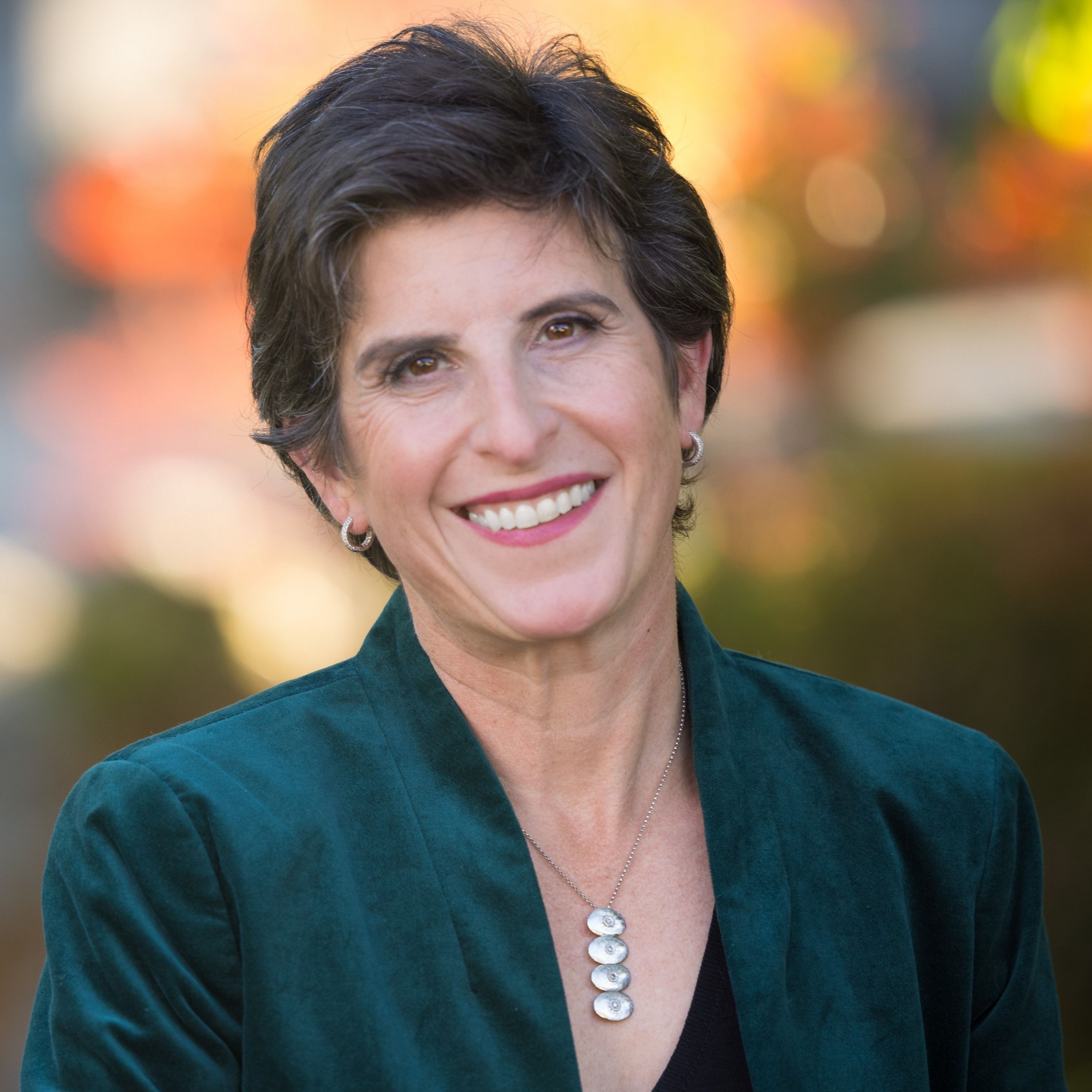
Lisa Fain is a keynote speaker, culture transformation expert, and lifelong learner who believes that how organizations learn is as important as what they achieve. Her work helps organizations build learning ecosystems and she is clear that mentoring is the linchpin of all of it.
Together, they created the Mentoring Program Success Lab: a peer learning community for the people inside organizations who are tasked with making mentoring work, often without the support, training, or structure they need to do it well.
What Most Mentoring Programs Get Wrong
Lisa has a phrase for the most common approach to organizational mentoring: pair and pray.
Match two people together and hope that it works out. Offer no framework, no purpose, no ongoing support.
She knows this model intimately because she lived it. As a young attorney at a large law firm in Chicago, she was assigned a mentor and told to go to lunch every month. The meals were pleasant. The conversations were interesting. And nothing about her actual career, fears, or sense of belonging was ever touched.
It was not until a different attorney began asking her real questions: what energized her, what she was afraid of, where she wanted to go, that she began to believe she had a place in the profession at all.
"It wasn't until there was another attorney who really took an interest in me, who saw what lit me up, who saw what drained me, who asked me questions that really required me to reflect, that I really started to feel invested in my own career." - Lisa Fain
That contrast, between mentoring as a checkbox and mentoring as genuine investment, is at the heart of everything Tamara and Lisa teach. And when organizations hand someone a mentoring program to run without training, support, or clear purpose, it is almost guaranteed to produce exactly that: the appearance of mentoring without any of its power.
✨ The Well Woman Principle: Ease is how we lead and ease does not come from doing more. It comes from doing what actually works. When mentoring is built with intention from the start, it stops being one more thing to manage and starts being the current that carries everything else.
What Real Mentoring Actually Looks Like
So what is the alternative?
Lisa describes three characteristics that define a real mentoring relationship.
The first is reciprocity. Both people give and both people receive. The mentor does not just pour; they learn. In fact, some of the richest benefits of mentoring flow toward the mentor: sharper leadership, greater cross-cultural fluency, higher career satisfaction, and a steady stream of new ideas.
The second is learning. Not as a side effect but as the point. If learning isn't happening, it is a nice conversation at best.
The third is co-creation. This is where mentoring becomes something distinct from coaching. In a mentoring relationship, both people shape the parameters of how they will learn together. There is a quality of equanimity — of two people arriving as whole, capable humans rather than one who has answers and one who has questions.
"I like to say that all great mentors are coaches, but not all great coaches are mentors." - Lisa Fain
What makes the difference is the willingness to share your own experience as a learning tool, to bring curiosity rather than prescription, and to trust that the person across from you already has more wisdom than they realize.
✨ The Well Woman Principle: Joy is how we sustain and there is something genuinely joyful in a mentoring relationship where both people walk away more whole than they arrived. When reciprocity replaces hierarchy, the relationship stops feeling like an obligation and starts feeling like one of the best parts of the work.
When People Are Seen, They Stay and They Grow
There is a difference between a workplace where people perform and a workplace where people thrive. Performance can be extracted. Thriving has to be grown.
Mentoring, done well, is one of the few organizational investments that reaches both. It does not just sharpen skills or accelerate a career timeline. It changes how a person feels about the work itself and about their own capacity to do it.
Tamara is direct about this: the research is unambiguous. Employees who are genuinely mentored report higher job satisfaction, stronger sense of belonging, and greater confidence in their own leadership. They are more likely to stay, more likely to rise, and more likely to bring others along with them.
But the deeper shift is harder to measure. It is the moment a person stops waiting for permission to take up space and starts trusting that they belong in the room. It is the moment someone moves from "I think I can do this" to "I know I can." That transition does not happen through performance reviews or professional development modules. It happens in relationships.
"Mentees gain new knowledge and skills, they gain career advancement, they have greater job satisfaction, they have greater self-efficacy." - Lisa Fain
Self-efficacy. That word matters. It is not just confidence. It is the deep, grounded belief that you are capable of navigating what comes next. That is what real mentoring builds. And it is something no training program, no matter how well designed, can manufacture on its own.
Lisa puts it plainly: the most important thing a mentor can do is help someone see themselves more clearly. Not through flattery or cheerleading, but through honest reflection, genuine questions, and the willingness to say — I see what you are capable of, even when you cannot see it yourself.
That is the kind of mentoring that does not just move people up. It moves them forward into fuller, more grounded, more purposeful versions of who they already are.
✨ The Well Woman Principle: Impact is how we serve and the most durable impact is not always the loudest. It lives in the woman who finally stopped shrinking in meetings because someone took the time to help her see herself clearly. It lives in the team that stayed together because people felt genuinely invested in. That ripple does not stop.
Why Mentoring Is a Vehicle, Not a Destination
One of the most clarifying things Lisa says in this conversation is simple: mentoring is not the goal.
It is the vehicle to the goal.
That distinction matters enormously. Organizations that invest in mentoring without first knowing what they are trying to achieve are building a road to nowhere. But when leadership is clear —we want to improve retention, we want to build succession depth, we want to create a culture where people actually grow — mentoring becomes one of the most powerful tools available.
Tamara points to Utah State University as a compelling example: a campus-wide mentoring culture built from the top down, fully integrated into institutional expectations, with measurable outcomes tied to clear organizational goals. What struck her most was not the program itself, it was the depth of belief the senior leadership brought to it.
"When we're really investing from the beginning, it's always that sort of starting with the end in mind." - Tamara Thorpe
That is the standard Tamara and Lisa bring to every organization they work with. Not: do you have a mentoring program? But: do you know what you are building toward and is mentoring the right vehicle to get you there?
✨ The Well Woman Principle: Ease is how we lead and clarity is where ease begins. When you know exactly what you are building toward, every decision downstream becomes simpler. Mentoring with a clear purpose does not add weight to an organization. It lifts it.
For the Leaders and Program Coordinators Here
If you are the person inside an organization who has been handed the job of making mentoring work, often with limited resources, unclear direction, and no one to turn to, this episode is especially for you.
Tamara and Lisa created the Mentoring Program Success Lab precisely for this moment. It is a twice-monthly peer learning community for mentoring program coordinators at any stage: just starting out, trying to strengthen what already exists, or looking for ongoing support to sustain what is working.
Because one of the most consistent things they see is isolation. The feeling of being the only one trying to make this happen, without training, without peers, without anyone who truly understands the work.
The Mentoring Program Success Lab is the answer to that isolation. Enrollment is ongoing. There is no set start date, and new members are welcomed every month.
Learn more and join here: https://tinyurl.com/MentoringProgramSuccessLab
What would shift in your organization or your own career if mentoring were treated not as a nice-to-have, but as the cornerstone of how people grow?
What becomes possible when the relationships around you are built on reciprocity, genuine curiosity, and shared investment in each other's development?
The full conversation with Tamara and Lisa is waiting for you. It is the kind of episode that changes how you see every relationship in your professional life.
Below is the full transcript of our conversation, lightly edited for clarity.
Meet Tamara Thorpe and Lisa Fain
Giovanna Rossi: Hello, hello! Welcome to the show, Lisa and Tamara!
Tamara Thorpe: Thank you so much for having us.
Lisa Fain: So happy to be here.
Giovanna Rossi: Yeah, it's so good to have you on the show, both of you together, and this is gonna be fun because we can have a really good conversation about a topic that is really important for women and for listeners of this show. And, just to kind of frame a little bit here for listeners, when we think of mentoring, people listening might think of a lot of different things. You might think of your own experience, or lack of, or your own experience being a mentor.
Giovanna Rossi: But I'd like to frame this as, like, what does mentoring really look like when we actually want people to thrive and not just perform? And so, I'll just kind of throw that out there as we get started, but to get us going, I'd love to hear from you, Tamara, and then Lisa, who are you in the world today as you're showing up here on the Well Woman Show?
Tamara Thorpe: Thank you for that big question. I think, you know, today in the world, I am a woman really trying to figure out where I am in all the spaces at home and at work, and in my life and world outside of home and work, and in all of that, our topic today mentoring plays such a huge role in it. But as I am getting older, I'm sort of thinking about what this sort of second half of my life looks like. And so today, here, I'm coming to this conversation really thoughtfully and really intentionally to talk about mentoring and its impact.
Tamara Thorpe: Because for me, in where I'm at today, it really does play such a crucial role in this sort of second half of my life, and that, you know, it really is the culmination of the work that I have done as a consultant for the last 20-plus years, to build mentoring programs through Real Mentors Network and my collaboration with Lisa. So that's who I am and where I'm coming from today.
Giovanna Rossi: Okay, thanks, Tamara. And Lisa!
Lisa Fain: I love the question, Giovanna, and the way that you asked it, because there's so many ways I can answer it. You know, I think I am, like Tamara, shifting to a new phase of my own life as I have two adult daughters. One who is transitioning to the work world from school and one who is knee-deep in her studies and discovering herself. So, I am a mother. I am a wife. I am a keynote speaker. I'm a business owner.
Lisa Fain: I think first, foremost, and underlying it all, I'm a lifelong learner who really believes in the power of learning and ongoing growth as a way to fully live. And, you know, that really fuels my passion in my own relationships. It fuels my passion in my professional relationships and in the work that I do to help organizations transform their cultures and achieve the best results they can through creating learning ecosystems for which mentoring really is the linchpin.
Giovanna Rossi: Okay, love it. Thank you both.
The Moments That Shaped How They Think About Mentoring
Giovanna Rossi: And so, you both work deeply in mentoring and leadership, and so Tamara I want to ask you, what's a moment that really shaped how you think about mentoring today?
Tamara Thorpe: A lot of the moments, well, I think there's two. One of them came, I was sitting on an airplane, and I had this sort of moment where I had been thinking about where does all the work that I have done in my life intersect. So, I was sort of at a career crossroads. And looking at the work I had done as a cross-cultural consultant, as a leadership consultant, as somebody who had done a lot of work in international education, as somebody who had done a lot of work in my faith community and used leadership development, and I was looking for the intersection. Where do all these things I've done at different stages in my career, or in different facets of my life, intersect?
Tamara Thorpe: And as I was sitting on an airplane, sort of taking notes about that intersection. Mentoring, just came really clearly to me as this sort of consistent pattern of either experiences that I had had of having incredible mentors, or experiences that I had had of mentoring other people in the work that I do. So that was a real epiphany, and I think once I started to study the scholarship of mentoring, which happened when I attended the first UNM Mentoring Institute conference here in Albuquerque, it just was revelatory to me that, the way that I had experienced and, mentoring as a mentee and mentor, was just the tip of the iceberg in what was available to me in my understanding about mentoring that has now really shaped and informed the last, sort of, 10, 15 years of my work.
Giovanna Rossi: Yeah. And Lisa, when did you realize that mentoring wasn't just kind of like a nice-to-have sort of thing, but really actually a lever for real change?
Lisa Fain: Oh, that's such a great question. So, I started my professional career as an attorney in a large law firm in Chicago. And you know, like many new lawyers, had this just total realization that despite 3 years of law school, I was entering a profession that I was very, ill-equipped. I mean, didn't know anything. And also, at the time, less true now 26 years later, but at the time, it was quite true that there weren't very many senior women partners at these law firms, and so our firm had, a mentoring, and for those who are watching, you can see my air quotes, program.
Lisa Fain: And the reason I'm using air quotes is because what they called a program is what Tamara and I now call pair and pray, meaning kind of pair people and pray that it succeeds, and their instruction to the one woman who they found to mentor me was take her to lunch. You know, so every month we went to lunch, really interesting conversations about lots of different things, and some really good meals.
Lisa Fain: But we didn't talk about my fears about becoming a lawyer, or my aspirations of balancing my home and my work life, or what lit me up, or what drained me, or any of those things. And, it wasn't until there was another attorney who really took an interest in me, who saw what lit me up, who saw what drained me, who asked me questions that really required me to reflect instead of them to tell me about the journey, that I really started to feel invested in my own career, and to feel like maybe I can actually do this. Maybe I'm more equipped than I thought.
Lisa Fain: Maybe this is a place where I can belong and a field that I can contribute to, and there is a way that I can balance my interests in the public interest with the profession of law in a way where I'm able to do well by doing good. So, I saw that dichotomy between what wasn't really mentoring and what was real investment in my development that was mentoring, and I saw the way that it affected my own confidence, my own competence, and my own fulfillment in my own career.
Why Mentoring Is the Most Misunderstood Word in Leadership
Giovanna Rossi: Okay, I have a lot of questions, let's just back up and kind of big picture about mentoring, because you know, working in women's leadership and policy and supporting women as I've done in my career for so many years, I see a lot of attempts at mentoring where a lot of the work is sort of an add-on to someone's other job. And I feel like they're not compensated a lot of times for the work, and it's like this extra thing that they're supposed to tack on to everything else they're doing or the mentoring program is sort of shoved over on the side in, like, a DEI program that, you know, the budget gets slashed, and so it's sort of like, is it fair to say it's sort of like a, you know, pushed aside and not really given the value that it should have?. And so, where are we with that? Like, what's the big picture with mentoring right now? How are you thinking about that?
Tamara Thorpe: Lisa, I'm gonna let you start with that.
Lisa Fain: Okay, so, the first is, you know, I like to say, only half-jokingly, Giovanna, that mentoring is the most promiscuously used word in leadership development. Because it really is so misunderstood. And underlying your question about, you know, why aren't people compensated for it, or why does it get pushed aside, it's because it's approached in a way that's about, I'll use a tech metaphor, it's not about copying the files on the hard drive, it's about expanding the operating system. And too often, we think about mentoring as just knowledge transfer. It's an extra lift because I have to help Tamara get up to speed so that she can become capable and she can learn the things that I learned, and it's all about her learning. But in fact, what we know when mentoring programs are set up effectively and mentoring competency is built in as part of leadership expectation, that it is a reciprocal relationship. That's a triple win.
Lisa Fain: It's a win for the mentee because they get exposure to new ideas, they have a sounding board and a safety net, and a laboratory of a place to learn and to grow. It is a win for the mentor, because they get, not just the feeling of giving back, which I don't want to diminish that, because that's really important, but it's sort of the least of the benefits. The most of the benefits is they become better leaders, they get a greater cross-cultural and cross-generational competency, they become more satisfied in their careers, they get new ideas, the communications… I mean, on and on and on. And then it's a win for the organization, because you have a place where people are more engaged, people stay for longer, the business results, are better, and again, so on and on and on and on and on.
Lisa Fain: So, the first thing is defining what mentoring is. The second thing is integrating it as part of a competency that is expected of leaders, so you can have that triple win as an organization. And the third is celebrating, acknowledging the wins as an organization so that you can really nurture mentoring, and have it become part of this kind of learning ecosystem in what you're doing. I'm not passionate about it at all, can you tell?
Giovanna Rossi: I love that. And so, would you add anything to that, Tamara?
Tamara Thorpe: Yeah, I think to add to your point of why often is it seen as something that is an add-on, or an extra, or a nice-to-have, is because people think of mentoring in a very traditional, hierarchical, and perhaps very outdated way of thinking of mentoring, right? Of this idea, at least a set of knowledge transfer, that there's sort of this wiser, more skilled, more knowledgeable person who's going to have to pour their knowledge, pour their energy into this sort of empty vessel of a person, to get them to be at the same level of this person, or at least a level at which is going to make this person's job easier or something that happens quite informally, or naturally, or organically.
Tamara Thorpe: And so, while lots of mentoring relationships, and often success will do happen naturally and organically, when we go into mentoring relationships with intention, with clarity, with purpose, the outcomes as Lisa articulated, are so much greater. And when those mentoring relationships are gone into with a sense of mutual respect and reciprocity, and with the belief that both mentor and mentee are coming into this mentoring relationship with their own equitable set of learned experiences and knowledge, then it's about creating this sort of learning ecosystem in the relationship, rather than this, you know, top-down relationship.
Tamara Thorpe: So, one of the shifts that has happened in mentoring in the last 20 years is a shift from that top-down to a more equitable, reciprocal relationship. And when that intention is laid out in how an organization might define mentoring or set up their mentoring program, it becomes a far more robust contribution to the organization as opposed to somebody sort of being given this additional task without any training, without any preparation, without any purpose, which, as you know, we've seen with many DEI programs, when you know, somebody's given the task to run DEI without any structure or clear purpose or support, those programs don't succeed. And so, mentoring has sort of fallen into that same category.
Tamara Thorpe: And I think one of the things I've learned as somebody who has been a leadership and organizational consultant for a long time is that this sort of falls into the category of, you know, the soft skills, the nice-to-haves after the technical skills that I've said for years, it makes more sense to companies to spend money on a photocopying machine than it does on skill development or interpersonal relationships. And that is starting to shift, but that's where the better investment is, is when we invest in our people and their development and their future, and we know the data could not be more clear that Millennials, Gen Z, and people who are coming from underrepresented populations see learning and development as their primary hope for their job. I'm going to this job because I want to learn, I want to grow, I want to develop relationships, and when that's not happening, they leave.
Mentoring vs. Coaching: What’s the Difference?
Giovanna Rossi: Yeah, I hear that. And, I'm curious, because I've been to mentoring events or these kinds of things where people sit down and they just say, well, what advice do you have for me? And so, I'm curious, and I'll throw this to Lisa, in terms of the integration of mentoring and coaching because I have a background in coaching as well as doing all this, and you know, when people say that to me, like, well, what advice do you have? My response is more like, well, let's create a space for a conversation first.
Giovanna Rossi: And then, you know asking them to really find some of the answers for themselves, because I think, and this goes to the whole point of this show, and this Well Woman community, which is that we need to support women to trust their own inner knowing and their own knowledge before just, you know, asking for like, external advice and pieces of information. I mean, sure, there are definitely times when we need a specific piece of information, right? Or, like, a specific skill, upskilling something. But, yeah, what would you say about that, Lisa?
Lisa Fain: Yeah, there's a lot in there, right? So, the first thing is that, you know, I could give you a whole diatribe on kind of, the mentoring events, which isn't really mentoring. It's not that there's not value in them, there's some great value in that connection, but it's not mentoring, per se. So, let's talk about, first, the definition of mentoring which will lead us into this dichotomy… well it's not even a dichotomy, it’s the relationship between mentoring and coaching, right? So, I like to say that there are three characteristics of mentoring that will help you understand what mentoring is. One is this idea of reciprocity, right? That mentors give and mentees get, but also mentees give and mentors get. There really is this reciprocity, so that's thing one.
Lisa Fain: Thing two is learning. Learning is the purpose, it's the process, it's the product of the mentoring relationship. So, you have reciprocity and you have learning. If you don't have learning, it's just a great cup of coffee or a really delicious lunch. It's nothing. It's not really deeper than that.
Lisa Fain: So, reciprocity and learning. And the third characteristic, and this gets to the difference between coaching and mentoring in a real way, is this idea of co-creation. In a mentoring relationship, the mentor and the mentee are co-creating the relationship. It's really an important distinction because there's really very few others, if any other relationship in the workplace where there's this idea of equanimity of setting the parameters for a healthy learning relationship that happens by both parties. So, I like to say that all great mentors are coaches, but not all great coaches are mentors.
Lisa Fain: Really good mentors use those coaching skills, and you and I know, as coaches, Giovanna and Tamara as well, that those are asking questions like appreciative inquiry, right? Those are leading with curiosity. It's recognizing that the learner who, in this case we know there's reciprocity, so both are learners, right, come whole to the conversation as opposed to broken to the conversation, and so many other skills that coaches use. The difference is this idea of co-creation, and it's much more appropriate in a mentoring relationship than it is in a coaching relationship, to share your own experience as a tool for learning. Let’s like, contrast that for a second with coaching. If you hire me as your coach, and you say, Lisa, help me create a vision, and I come to that coaching relationship with no tools, no exercises, nothing, you're gonna find a new coach right quick.
Lisa Fain: But in the mentoring relationship, we can talk about a vision. I don't have to have a single answer. I don't have to know, I don't have to come with a tool. I have to come with this ability to ask really good questions, so that either I can help you discover it, or together we can dive in and discover it together. So, it's a very different kind of modality, where there's a lot of overlap.
Giovanna Rossi: Yeah, I love that. Thank you for really laying that out clearly. And Tamara, if you have anything to add to that, but I also want to get into, kind of, where you all are seeing the system of mentoring and the programs really not working, and like, how are you… because you two are fabulous, you know, separately from each other, but now that you're working together, there's this, like, powerful collaboration that's happening. And I want to really hear about what's the problem you're fixing, and what is your solution?
Why Mentoring Programs Fail And What Organizations Get Wrong
Tamara Thorpe: So, one of the things that we are seeing as organizations buy into mentoring and want to integrate mentoring, as we kind of suggested earlier, is a failure to invest in the resources and to invest in creating and fostering a supportive culture, and full integration into organizational systems, right? So, they'll, you know, sort of pick someone and say, hey, you're now in charge of our mentoring program, let us know what you need. As opposed to thinking more systemically, more sustainably, and instead of thinking about where their investments really are best going to be suited, depending upon what their actual organizational needs for mentoring are.
Tamara Thorpe: So, as a result, a lot of energy will get poured into a mentoring program without that sort of designated mentoring program coordinator really having the tools and resources they need to have something that's sustainable and fully integrated into the systems and supported by a culture that really appreciates and fosters a culture of mentoring.
Tamara Thorpe: And so, which, you know, I'll let Lisa speak to that culture of mentoring, because that is such a crucial part to mentoring programs being sustainable. But to answer your question very succinctly, we're seeing a failure of investment into, sort of, what it's really going to take to build something that's effective and sustainable by really failing to provide mentoring program coordinators with the tools, resources, and environment they need to run a successful program.
Giovanna Rossi: Yeah.
Lisa Fain: That's spot on. You know, the only thing that I would add to it is, well, I guess there's a couple things to add to it. The second problem that we often see is that organizations will invest in technology and then say that that's gonna solve our mentoring problem. There is great technology out there, and there's many that Tamara has worked with, and that I've worked with, and happy to talk to folks about what we recommend depending on culture and all of those things, but technology is not an end. Technology is a beginning and a facilitator of scaling mentoring without integrating it into other leadership competencies, without having leaders who hold people accountable for investing in their own learning and in the learning of others. Without measuring success, without having ongoing support, without integrating it with other learning initiatives, you know.
Lisa Fain: We’ve seen, organizations that invest in the technology, and then they dedicate financial resources to making that happen, and all of the things, and they have a totally separate learning curriculum and the two don't speak together. And then they wonder why either there's not more participation in mentoring, or there's not more participation in the learning initiatives that they've invested so highly in. So, this sense of creating a learning ecosystem within their organization, and integrating it into what they expect of leaders, it can be so transformative for organizations. And instead of being another spend, it can help utilize and maximize the spend that they've already had, to get the results that they're looking for.
Giovanna Rossi: Yeah, so I think if we have, like, employers or leaders, you know, listening to this show, and they're like, yeah, I totally get that, what can they do about it? And I know you're offering a program that folks can join, but what are they gonna do? Like, what is the solution and what are they going to get from that?
Tamara Thorpe: So, one of the solutions that Lisa and I both, I mean, individually, collectively in our work, our hope is that organizations seek support as soon as they have the idea, right? As soon as they have the idea, we want to have mentoring program seek support, and get the guidance from someone like myself or Lisa, or us combined that says, here's the pathway forward, and here's where technology could be useful, you know, at a certain point in that pathway.
Tamara Thorpe: But what we are finding is that a lot of organizations have already started some level of initiative and assigned that work to a mentoring program coordinator who is now trying to figure out how to run this program effectively and sustainably without training and support. And so, we've created the mentoring program Success Lab to create two things. An opportunity for mentoring program coordinators to learn more about building sustainable mentoring programs, by having a monthly meeting where we are focused on an aspect of mentoring programs and what makes them successful.
Tamara Thorpe: But two, by also having a learning community, a learning community of peers who are all in the same boat, trying to do the same thing, perhaps in different spaces, in different industries, but really trying to achieve the same thing and learning from one another, so that they are, you know, because one of the things we've noticed is that there's a real sense of isolation, right? I'm the only one in this organization trying to make mentoring happen, and I don't know what I'm doing, and I don't have anybody to really learn from or get empathy from, and so we have, through the Mentoring Program Success Lab, tried to build that community so that there's this learning community, as well as then infusing that with opportunities to learn the practices that are necessary, that they can build and integrate into their programming so that it can be as effective and sustainable as possible.
Lisa Fain: It's a bit meta, isn't it, right? Because we know that mentoring, you know, we've talked sort of so far implicitly, Giovanna, about mentoring being this one-on-one relationship, but there's other forms of mentoring as well. There's peer mentoring. There's masterminds. There's group mentoring. There's complementary mentoring, which is someone more junior mentors somebody more senior. There’re all sorts of modalities, and what underlies it all, is that we learn in community, whether it's one-on-one, whether it's in groups, we learn more effectively, we have a greater sense of belonging, we accelerate our results much faster.
Lisa Fain: So, what Tamara and I have created is a peer mentoring community and a learning community for mentoring program coordinators, so that they can share best practices. They have two experts in the field to learn from, but also peers to learn from and with together. So, we're super excited about what that looks like. There's a second piece to your question, though, that is related to the Mentoring Program Success Lab, but separate from it. Which is that in order for organizations to be successful in creating a mentoring culture, there are two things that have to happen.
Lisa Fain: One is, organizations have to have the systems and the structure in place for mentoring to succeed. That's a capable, supported mentoring program coordinator, that's the technology that it needs, that's the integration with its learning curriculum and all the other things that I talked about. And the second thing is it has to foster individual agency and ownership over learning. Tamara knows this better than anybody as somebody who's studied generations, right? That Millennials and Gen Z have a very different expectation for learning, and they expect the organizational system piece. Organizations are expecting the individual agency piece. So how are you equipping both the organization and the individuals to create those high levels of learning?
Lisa Fain: And that's success in mentoring. And that's one of the things that we help with in the Mentoring Program Success Lab, is helping to build individual capacity for mentoring, for mentors and mentees, and helping organizations set the structure and systems in place.
Giovanna Rossi: And are you mostly seeing that it's larger organizations that have the time and capacity to take this on, or are smaller organizations also good, you know, targets for you.
Lisa Fain: I love that question.
Tamara Thorpe: We design the program for a range of target, right? Because we know that there are lots of what are considered mid-sized organizations that are really sort of proactively in their systems and structures building and mentoring but also have mentoring program coordinators who need support. We're seeing a need also in higher educational institutions as well, as well as some of, you know, folks in the larger corporate sector.
Giovanna Rossi: Hmm.
Lisa Fain: Yeah, it's all over the map, and the truth is that a mentoring culture is critical in organizations of any size and any industry. The path to it is different depending on the context of the organization but the skills that are necessary for mentoring program coordinators to create that are similar. It's just the application of the context is different. So, there is no prescription pad. If there were a prescription pad to a successful mentoring culture, then Tamara and I would be in a different line of work. It is all about understanding context, and it's applicable across industry, across size of organization. It's just applicable but differently.
Giovanna Rossi: Yeah, I mean, it seems very much aligned with, you know, I do a lot of work in workplaces for employers to understand, you know, if they can create a workplace culture that supports their employees that could include a mentoring program, right? But it includes a whole lot of other things, that they will do better as a business and their employees will thrive. And we see that across industry, across size of organization. It really just actually comes down to, is there someone in the organization who's championing it? Who's gonna track it? And then what happens when that champion leaves?
And are there things built into the programs that you're offering, or the things that we offer in the family-friendly workplace culture, are there data points or data systems built into that to show the return on investment? How do you deal with that? Like, if people are like, well, I really want to do this, but I've got to see the return on investment. Like, how do you respond to that?
Building a Mentoring Culture: Leadership Buy-In and ROI
Tamara Thorpe: I'll start by saying, because what came to me was a story about Utah State University has a really impressive campus-wide program. I have had the opportunity to meet with the leadership there and interview and talk with them about mentoring and they've published a lot of their work about how they've built mentoring into the culture of the university there. And because of their structure and the culture there, how critical it is. And I remember, when I was going in to talk to the head of the university about this program, you know, I was going a bit skeptical. I've spent a lot of time talking to CEOs and leaders who usually don't know much about these sorts of initiatives and, you know, kind of say, yeah, we do this thing and I support it.
Tamara Thorpe: But I remember seeing that conversation and being blown away at how invested the top leadership was in building a culture of mentoring into the university's overall culture, and recognizing how important that was. And so, to answer your question about measurability, it really comes from being able to say, does our top leadership really believe in this and how is the top leadership building markers and measures into, you know, KPIs for employees, outcomes for students, you know, or employees, whatever it is, right? But the leadership has to be fully bought in, leadership has to be driving it, and that allows for those measures to be put in, for it to be built into the expectations of the roles of leaders and managers, to be built into expected outcomes for employees who are going in as mentees. These all become really critical, and so when we're really investing from the beginning, right, it's always that sort of starting with the end in mind. If we know what we want the mentoring program to achieve, then we can start building a mentoring program.
Tamara Thorpe: Lots of folks sort of go in, well, we know mentoring is good and we know we want a mentoring program, so let's build it. Without having real clarity on what they really want that to achieve. Do we want it to increase retention? Do we want it, you know, to increase, performance? Do we want it for recruitment? There's lots of different functions that a mentoring program can have in an organization. And if you don't have clarity on what you want to achieve, which should come from our top leaders. Our top leaders should be able to say to the organization, this is our vision, and this is how we're going to achieve it and this is how we're going to measure it. And when mentoring is fully built into that system, measuring and finding the ROI becomes really easy.
Giovanna Rossi: I love that. Okay.
Lisa Fain: It's such an important point, because mentoring is not the goal.
Giovanna Rossi: Hmm.
Lisa Fain: Mentoring is the vehicle to the end result. And that's another reason there's no prescription. Like, are you looking for engagement? Are you looking for retention? Are you looking for succession planning? And what are those things? But there's another answer to your question, too, that I think is really important, Giovanna, which is measurement is really important.
Lisa Fain: And the beauty of our field of mentoring is that there's actually a ton of data. And a ton of research on outcomes. So, if there is a program coordinator who is looking for data on the benefit of mentoring, we can help you find that. It absolutely exists. But the best data are the stories and the role modeling that leaders do in organizations that show that they have invested in their own learning, and they have invested in learning in others, and it's made a difference. A story from your CEO about the mentor who made a difference in their life when they were young, and what they learned from them, and how they're continuing to mentor other people is so powerful in beginning to create a mentoring culture. And collecting those stories can be super, super, effective.
Giovanna Rossi: Yeah. Well, thank you for calling that out. Actually, I really want to underscore that, and I like how you framed that the mentoring program is really the vehicle for arriving at, you know, wherever you want to go with your team, with your organization. And it can be built in so many different ways, and so I think for a lot of people listening, I would really ask you to reflect on your own organizations or your own teams, and think about what your goals are, and could mentoring be a vehicle for getting there.
The Mentoring Program Success Lab
Giovanna Rossi: And, Lisa and Tamara, it's been such a pleasure talking to you today about all things mentoring, and we're gonna link to your program that you've collaborated on, but just give us the little rundown on what the program is and how people can find you.
Lisa Fain: Yeah, so we, created the Mentoring Program Success Lab, as Tamara said. It is a community for mentoring program coordinators whether you're just starting out, whether you are trying to make your current mentoring program more effective, whether you're wanting ongoing support on what you've already created successfully, we all know that learning and community is really, really powerful in terms of achieving and sustaining engagement. So, we've created a twice-monthly meeting, which is curriculum-based. So, we have learning objectives at different phases and stages of the mentoring initiative.
Lisa Fain: But it's also driven by the learning needs of the participants as well. You'll get our expert guidance. You'll get a shared community with others, and really evolving content as well for support. And we'll link to where you can find us, but we are continually accepting participants, and I think you'll find that it is a warm learning environment that models these principles of mentoring that will help, if you take them to your organization, it will help your mentoring program really soar. What would you add to that, Tamara?
Tamara Thorpe: I think you covered a lot of it and as Lisa said, enrollment is ongoing. And so, there's sort of no start date and no end date. We accept new folks into the program every month, and so it's never too late for people to enroll and join, because we're really excited to have this community of support for folks, because we are just so deeply committed and invested on folks feeling equipped to have successful programs. And so that's our hope and that's our goal, and we look forward to having more folks join us.
Giovanna Rossi: Awesome. Thank you so much, and we will put all of this in the show notes at wellwomanlife.com, and this will air on NPR, and so folks can find you, Lisa and Tamara to follow up. And thank you so much for being on the show.
Tamara Thorpe: Thank you for having us.
Lisa Fain: Thanks for having us, Giovanna.