




The Work the Economy Finally Can’t Ignore: A Conversation with Lucía Cirmi Obón
Hey Well Woman!
Think about the last time you did something for someone else that no one noticed.
Not because it wasn't important. But because it was so woven into the fabric of daily life that its absence would have been felt long before its presence ever was.
That's the nature of care. It holds everything together precisely because it never stops. And for most of economic history, that reliability (the fact that it never stops) has been taken for granted rather than recognized for what it is.
Lucía Cirmi Obón has spent her career making the case that this is not just unfair. It is economically incoherent.
This month on The Well Woman Show, I sat down with Lucía for a conversation that reframes care not as a personal sacrifice but as a global economic force whose time has finally come.
Meet the Woman Putting Care on the Economic Map
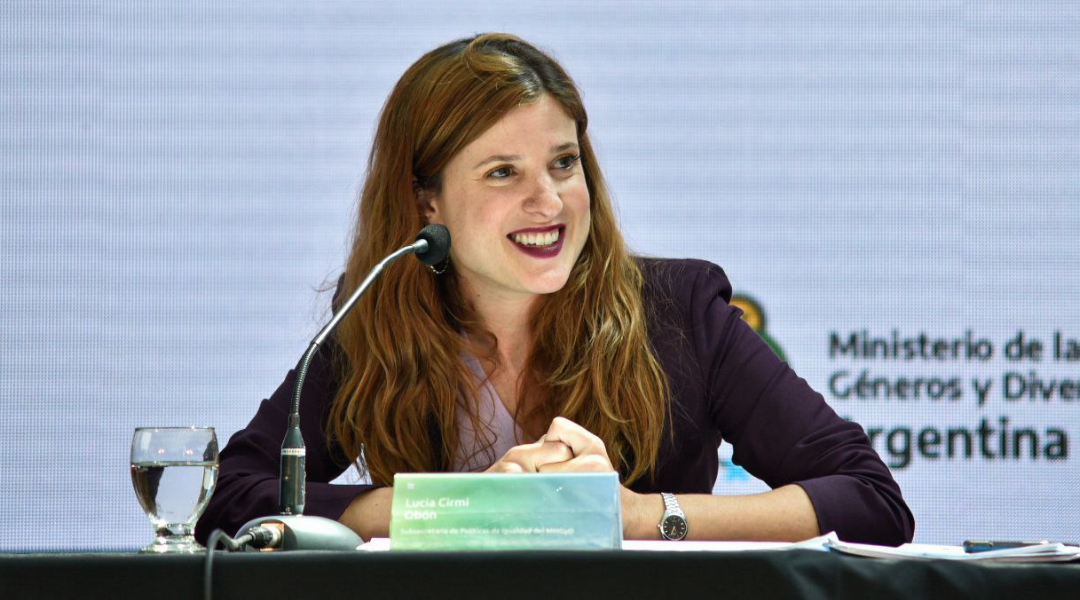
Lucía Cirmi Obón is a feminist economist and activist who served as Argentina's first National Director of Care Policies, where she built the framework for a national integrated care system and drafted the participatory bill Cuidar en Igualdad — Caring in Equality.
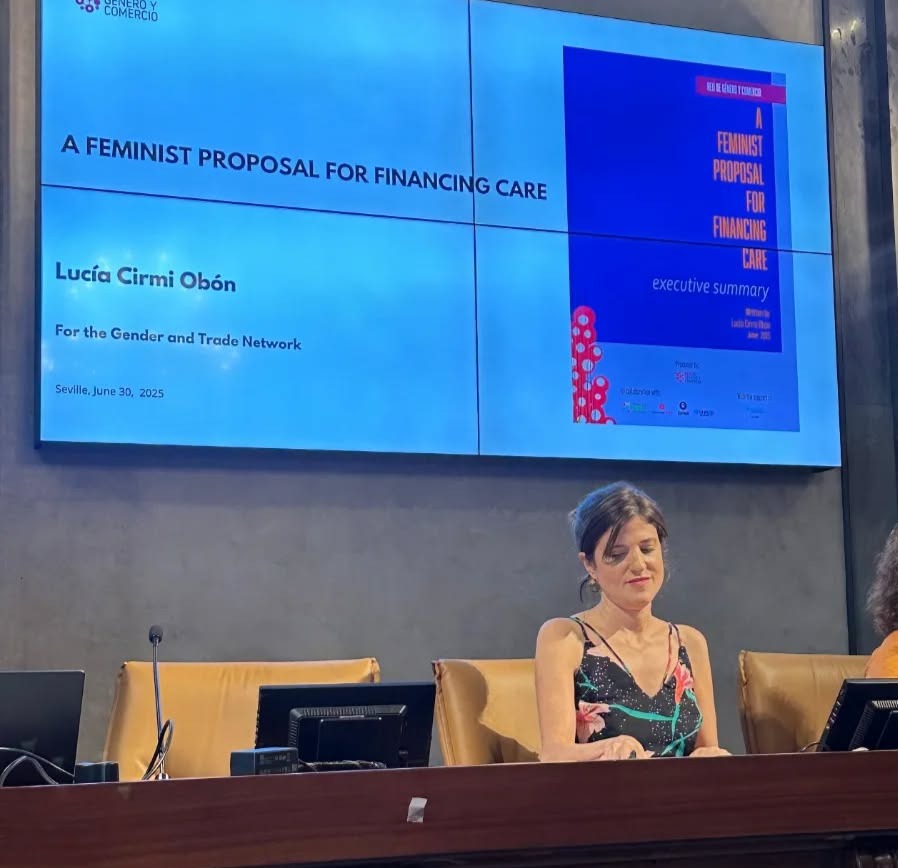
She is the author of A Feminist Proposal for Financing Care and Economía para sostener la vida (Economy to Sustain Life), and she leads Paridad en la Macro, a network of women macroeconomists working to diversify who shapes economic thinking at the highest levels.
Her argument is not sentimental. It is structural. Economies that fail to account for care work are not just inequitable, they are incomplete. And the cost of that incompleteness shows up everywhere: in falling fertility rates, in social isolation, in the quiet depletion of women who have been asked to hold everything together with no systemic support.
“When you give space to public policy regarding care work... you create more jobs and jobs that will work in the future. You also distribute better the wealth, because most of the people working in this sector actually belongs to the lower classes.” - Lucía Cirmi Obón
The Work You Do Every Day Is More Valuable Than Anyone Told You
Caregiving (raising children, supporting aging parents, holding communities together) has long been treated as a labor of love that sits outside the real economy. Something women simply absorb because they love the people they care for, or because no one else stepped up to do it.
Feminist economics challenges that framing at its root. Although it sounds like it belongs in a lecture hall, its core questions are the ones every woman asks herself constantly.
Who is doing the work that doesn't show up on any balance sheet?
What happens to families and communities when that work goes unsupported?
And what becomes possible when care is finally treated as the essential infrastructure it has always been?
Lucía's entire career has been built on those questions and on fighting for the policies and funding that turn the answers into real change. What she found across Latin America, and what research confirms globally, is that when care is properly supported, it doesn't just help families. It creates jobs. It reduces inequality. It builds the kind of social resilience that holds communities together when things get hard.
Care is not a soft issue. It is an economic one. And the women who have been living that truth without anyone naming it are not on the margins of this conversation. They are at its center.
✨ The Well Woman Principle: Impact is how we serve and impact starts with recognizing the full weight of what you already bring. When you see your own experience reflected in the larger economic picture, you stop treating it as something separate from your professional identity and start building from it.
What Argentina Knows That We're Still Learning
One of the most vivid things Lucía brings to this conversation is a window into how care can be organized differently, not just as a policy framework, but as a lived community experience.
In Argentina, particularly in lower-income neighborhoods, there exists a deep tradition of communal care. Third places (not home, not work) where children are fed, families gather, and the load of daily life is shared rather than shouldered alone. Lucía describes it as something worth exporting to the rest of the world. And listening to her, it's hard to disagree.
Because the alternative, which many of us are living, is a kind of high-functioning isolation. We are productive and capable and completely on our own. We have optimized our schedules and outsourced what we can and still end up depleted, because the human need for community and mutual support cannot be scheduled or outsourced away.
Building real community is not a nice-to-have. It is care infrastructure at the personal level. And it starts with small, deliberate choices: asking for help before you hit the wall, showing up for someone else without waiting for a reason, creating the kind of reciprocal relationships that actually hold you when things get heavy.
“No one really feels alone here.” - Lucía Cirmi Obón
That line from Lucía stopped me. Because for so many women I know (high-achieving, deeply connected on paper, quietly lonely in practice) it describes exactly what is missing.
✨ The Well Woman Principle: Joy is how we sustain and joy is not something you produce in isolation. It lives in the spaces between people. In the meal shared, the favor returned, the neighbor who shows up without being asked. Building that kind of community is not a distraction from your goals. It is part of how you stay alive to them.
The Economy Needs You in the Conversation!
Here is something Lucía is direct about: women have been systematically kept out of economic debates. Told implicitly, and sometimes explicitly, that fiscal policy, macroeconomics, and budget decisions are not their territory.
The result is that the people making decisions about care funding are often the people least acquainted with what care actually requires. And the women who understand it most deeply from the inside, from lived experience are not yet in the room in the numbers needed to change that.
This is beginning to shift. The ideas Lucía describes such as care as infrastructure, care as a driver of growth and equality, care as a sector worth investing in, are moving from the margins of academic debate into international policy conversations. Organizations like the Work and Family Researchers Network are creating spaces where these perspectives meet the levers of real change.
But the shift needs more voices. Including yours.
✨ The Well Woman Principle: Self-trust is how we know and the knowledge that comes from living a life the economy forgot to design for is not anecdotal. It is expertise. The room needs what you carry. But the first step to bringing it into the room is simply believing it deserves to be there.
The Well Woman Show is delighted to partner with the Work and Family Researchers Network
and its next conference June 17-20, 2026 in Montreal, Canada where Lucia is going to be a keynote speaker.
For the Leaders and Business Owners
If you run a team or an organization, Lucía's research points to something worth taking seriously.
The workplaces that will attract and retain the best people in the coming decade are not necessarily the ones with the highest salaries or the most impressive perks. They are the ones that treat care as a legitimate part of professional life that build in the predictability, flexibility, and structural support that allow people to show up fully without having to pretend the rest of their life doesn't exist.
This is not charity. It is strategy. The cost of losing a great person because your culture never accounted for their whole life is almost always higher than the cost of building something that actually holds them.
✨ The Well Woman Principle: Ease is how we lead and ease within an organization is built intentionally, from the top. When leaders treat care as real, the people they lead can finally breathe. And people who can breathe do their best work.
A Different Way to See What You Already Do
Before you close this page, I want to leave you with one reframe.
The next time you move through your day doing the work that no one counts - the coordination, the caregiving, the invisible architecture of other people's lives - try seeing it not as evidence of how much you carry, but as evidence of what you know.
You understand, from the inside, what it takes to sustain a life. What support makes possible. What its absence costs. That knowledge is not background noise. It is the foundation of the most important conversation happening in the global economy right now.
And you have every right to be part of it.
Lucía's full episode is ready when you are. I think you'll find yourself in it more than you expect.
Below is the full transcript of our conversation, lightly edited for clarity.
Meet Lucía Cirmi Obón
Giovanna Rossi: I'm speaking with Lucia Cirmi-Obon. Bienvenidos! Welcome to the show!
Lucía Cirmi Obón: Thank you, thank you for having me.
Giovanna Rossi: And we do have a lot of Spanish-speaking listeners, and so if you want to throw in a Spanish word here or there, I know you're from Argentina, and so I appreciate you speaking with us in English, but feel free to say some things in Spanish as well, if you feel like it.
Giovanna Rossi: So, Lucia, I wanted to start with, asking you, not about your job title and your bio, but really about who are you in the world today.
Lucía Cirmi Obón: Oh. I'm a tiny person comparing to what's happening, but I would say I'm, someone who's always interested in inequalities, and the way public policy can change or not those inequalities.
What Is Feminist Economics?
Giovanna Rossi: And I know you're an economist, and you identify as a feminist economist. And I think that's fairly unique. There's probably a pretty small number of you in your country, in this country, in the world. What makes you a feminist economist, and how did you get there in your career?
Lucía Cirmi Obón: Well, when I was, at the university, I couldn't find in the regular classrooms the answers to the sources of inequality, I would say. And also, I have this feeling all the time, like, the economy we were studying, it didn't have a face, or it wasn't connected with what really people need from the economy. And when I met all the authors of the feminist economics, then I felt, okay, this is why I came to study economy.
Lucía Cirmi Obón: Because they look first for the well-being of the people, and how the production, the capitalism, or the system can work for that and not the other way around. I feel most of the time, even nowadays, the thing works the other way around, right? Like, we have to adjust our life to make production work well, and it should be the other way around, right?
Why Care Work Matters
Giovanna Rossi: Yeah, absolutely. That's such a good point, and I think it's a great way to start off our conversation, because, the well-being of people, of women, of children, of families, really can't be an afterthought to the systems that we're working in, right? But they are, because they weren't created by us or for us. So, how do you then go into a system that's already created without centering women and families and like, work within that system to create the shifts that you need to see?
Lucía Cirmi Obón: I think that when we leave space within the system for these kinds of policies to make people have a nice well-being. I mean, to have space, time, and resources for living well, you make the whole system work better. I think when the system is disconnected with these needs, it starts working wrong, and that's why we're watching nowadays, right? Like, the way financiation of economy ends in a way that many people, most of the people have plenty of shops, have informality, doesn't have any social protection. And when you go to the needs of inside the house, because that's what feminist economies do, right? Like, they look at the things that are working, the things that women are doing inside the house.
Lucía Cirmi Obón: The care work, or the law of care work, and they say, okay, here there should be public policy, right? And because there were not public policy regarding these issues in the last, I would say, century or even more, the system and the economists, most of the economists, they just thought, okay, this is a female knowledge and they're doing it because they love their children. That way of thinking led to this situation nowadays when we are having a falling fertility rates and we have a space for taking care of other people. So, when you give space to public policy regarding care work, and I think, well, in Canada, you have very interesting policies regarding that.
Lucía Cirmi Obón: Once you do that, and you create more jobs and jobs that will work in the future, you also distribute better the wealth, because most of the people working in this sector actually belongs to the lower classes.
Lessons from Argentina: Community as Support
Giovanna Rossi: Yeah. And so, I know you're working on public policy and also funding policy, right? Funding mechanisms. And so, what specifically are you doing in Argentina that maybe we're not looking at here? Well, we're definitely not probably looking at here in the U.S, but in other parts of the world as well.
Lucía Cirmi Obón: Well, I was in charge of the care policies in Argentina between ‘19 and ‘24, and now the current government is not interested in gender issues in general, and either in care policies in particular. There's a big structural adjustment going on, so many of the care policies we developed in the last years, they are not going forward anymore.
Lucía Cirmi Obón: But I think what is particular from Latin America and Argentina is that we have really strong, we call it communal care. We have this figure, especially in the more popular neighborhoods. This, how would you say, third place. This place where we feed many of the children who don't have all the food they need. And where you create this community that most of the time these mothers, they just leave it out, right? You have just your job, and your house, and your cell phone, and you're alone.
Lucía Cirmi Obón: And I think what we have here to maybe export to other parts of the world is this sense of community. No one really feels alone here.
Why Funding Care Is Still a Challenge
Giovanna Rossi: Oh, and so to do that, you need policy support and funding support. And so, what is the biggest challenge right now for you? And I know you're going to be a keynote speaker at the Work and Family Researchers Network conference in Canada in June, and we'll link to that in the show notes so folks can check it out and even get your tickets to attend. It's an incredible international space where researchers are brought in from all over the world to provide their, you know, most up-to-date research and findings on work and family issues. And so, what are you going to be talking about, if you can give us a little taste of what you're going to be presenting?
Lucía Cirmi Obón: I’ll probably really speaking about this, about where's the money to finance these policies we need because it’s something that when I was in public function doing these policies, it was really hard for us. I was in gender ministry. And for us, it was really hard to get the resources to go forward with these policies. When I ended up my job here, I work with other governments around Latin America, and I found that happens everything the same. Gender areas doesn't have any budget to do these things.
Lucía Cirmi Obón: And, mostly it's because they go in a different road, but the things they are proposing to the society applies to social policy, applies to labor policy, applies to macroeconomic policy. So, we need to mix it. And I think this conference is going to make it, in this way, to mix those perspectives. Because, I feel most of the time that we are a bunch of women studying these feminist ideas, about care on one side, and on the other side, very male spaces.
Lucía Cirmi Obón: I don't know if I'm saying it correctly, very masculine spaces. Thinking in the future of show, of thinking in how to solve the economy, without looking at this perspective. And I think we don't have to be, how do you say, ingenua?
We have to be critical enough to understand that we were asking the system to internalize a cost that, so far, it was only on our shoulders, right?
Lucía Cirmi Obón: Now we are saying, okay, we had to collectively pay for this. And this is not going to be just an easy thing to happen. I mean, we have to use all the ideas around and all the collective strength to make it happen. Otherwise, our agenda won't move because the women are taught to not get into economic issues, still nowadays. And I think going with this agenda very far away, we need for that to feel much more empowered with this discussion. Many peers that work on social policy or in inequality issues, they have great ideas, but at the end of the road, they find someone who says, there's no money for that. And they just have to say, okay.
And I want to encourage them to make them feel empowered enough to have arguments, to argument or argumentos in Spanish. To have all the ideas they need to discuss where's the fiscal space to do this thing, and why they're going to make it good for the rest of the economy. I don't know if I…?
Giovanna Rossi: Yeah, no, I do, I get that, and so, you know, it's really important to be able to carry the ideas and the policies forward into the more mainstream dominant culture spaces where that's not necessarily being talked about, and there's a lot of challenges with implementation in those spaces. And so, is it our job as women and professionals working in this space, is it our job to convince that dominant culture, masculine, male-dominated space to listen to us, or do we have to be strategic and show how it actually makes better business sense when you do implement these policies?
Lucía Cirmi Obón: I would say probably both. I mean, I try both, because time is not enough, and I think the job that the International Feminist Economy Association is doing is great also in that sense. And we have worked very far. If you look a few years ago, these ideas about care, they were not in the main area, and now they are, they're there. But, of course, they need, a welfare state behind. And if the welfare state is on judge, and the people are discussing that, well, it's quite hard. But I think the interesting thing about the care policies and the feminist perspective is that they go very deep into discussions within the house. It's really difficult to not feel touched about who took care of you, who will take care in the future. And so even people who are not really into politics or into public policy discussions, they are interested in who's gonna take care of them when they get old, right?
Bringing Feminist Economics Into Everyday Conversations
Giovanna Rossi: Yeah, and so on that note, actually, I want to ask you, what are a few things that we could share with listeners to help them with their own feminist analysis of mainstream economic debates that they might hear about on the news, or in newspapers, they might see, kind of very mainstream economic debates? And how can we use a feminist analysis at the community level, like, what questions should we be asking when we hear economic debates?
Lucía Cirmi Obón: Well, something that is really global in these days, I would say, is this new fashion on trad-wife. They are on social networks and they show how to be a traditional housewife. It’s a good thing, and it's amazing. And I would say that from a feminist point of view, we say it is. Actually, we want that you can choose that. We did a lot of options. You have free kindergarten, you have a really generous parental leave, egalitarian, the father also have the same leave. We want you to choose, and once you choose to stay caring if you want, that you have social protection, and that you don't feel endangered in any moment. And that we also want that the education of your children wouldn't depend on how much do you know to raise your children.
Lucía Cirmi Obón: Actually, nowadays, I'm a mother, and many of the things I look for raising my children are on Instagram, you know? And that shows that, actually, I don't know how to take care because I'm a woman. That I'm looking for social knowledge. And that's the idea we are running to. We are running to the idea that families don't know how to do. As society, we solve that if we want to not also live better, but also have jobs in the future, because these are the sorts of jobs that won't disappear. They estimate there is 31 million positions in the future regarding this, or I would say billions in English, I say, billions in the future, regarding this sector and we had to take advantage of that.
Giovanna Rossi: Okay, such a good conversation, and if you want to hear more from Lucia Cirmi-Obon, you can join her at the Work and Family Researchers Network Conference in Canada in June. We'll put the link in the show notes, and she'll be joined by a lot of other scholars and policy makers, and the Well Woman Show is a proud sponsor of the conference, and I've been to the conference several times, and been a speaker, and it's just a really great space for this conversation to move forward.
Giovanna Rossi: So, you're listening to The Well Woman Show, I'm Giovanna Rossi, I'm speaking with Lucia Cirmi-Obon, and we'll be right back.
Superpowers For Success
Giovanna Rossi: We're back on the Well Woman Show with feminist economist Lucia Cirmi-Obon. And Lucia, I want to go into a short segment to round out the show here called Superpowers for Success. And this is a quick round of questions that lets listeners learn more about you as a leader, as a person in the world, working on the things that you're working on. And the first question I have for you is, what does success in life mean for you?
Lucía Cirmi Obón: For me, success is actually doing something that transforms other people's lives.
Giovanna Rossi: Yeah, and you can do that as a feminist economist, or as a parent, right? Like, you can make that happen in all aspects of your life, and so I love that answer.
When did you know you were really good at what you do?
Lucía Cirmi Obón: Well, the first time I joined the government, it was in the Ministry of Economy. All the people were all male economists and myself. And, we reached to have this design and ran this huge cash transfer for youth that is called, ProgressR, Progress. And I feel good there, and I thought, okay, I can really transformed life from here, from public policy. I worked in many places before, but I understood the power of public policy. When it's well designed, when people get to understand it and get to know that public policy is there. I think that most of the things that are going on globally, they were between other things, because people don't really value the presence of the state, or really felt the state close enough in the last period. So now in Argentina, I'm working with a lot of people to think, thinking in an alternative platform, not only on care and family issues, but about the Argentina we want to build, because there are really, really hard days here in the South.
Giovanna Rossi: Well, that makes me want to ask you, do you think you'll run for office?
Lucía Cirmi Obón: Well it depends. I don't think in that, as an individual, I would say, project? But we are working in a collective platform that is called Futuros Mejores. It will say in English, it will be, like, Best Future. And I focus in this period in ideas rather than people, because I think the last time we were in government, there was too much focus on the people and on their names, I would say in the politics, about the idea of the politics, and I think that was part of the problem.
Giovanna Rossi: Yeah. Okay, and Lucia, can you describe a personal habit that contributes to your well-being so you can do everything you do in the world?
Lucía Cirmi Obón: A habit, I would say, I work a lot, and I've planned a lot.
Giovanna Rossi: Plan.
Giovanna Rossi: Yeah, okay. And what superpower did you discover you had only to realize it was there all the time?
Lucía Cirmi Obón: I think I spent a lot of time listening to people, but also trying to understand
people who doesn't think like me. I'm trying to be, I would say, empathic. Is that good?
Giovanna Rossi: With empathy?
Lucía Cirmi Obón: With empathy. And I try to work a lot on that, and also because I think in this also, in power spheres, this double standard that maybe you work for social justice, but then you're not so good with your own people, and I try to work a lot on that, because I think that doesn't have any sense. And I think that happens a lot in politics.
Giovanna Rossi: Oh, yeah, I think that's true. I think you named a really very important issue there. Lucia, what advice would you give your younger self, say, 10/15 years ago?
Lucía Cirmi Obón: Have some rest, because once you become a mother, you won't.
Giovanna Rossi: That's true.
Lucía Cirmi Obón: To younger people, I would say, like, believe in the power of your own ideas and opinions, that you just think they are just opinions, or ideas that doesn't have any value. They have value. Work on that, and share it.
Giovanna Rossi: I love that. And you obviously identify as a feminist in your professional life. How does that go into your personal life as well?
Lucía Cirmi Obón: Well, of course, it has a lot of contradictions, like, all the ideas that go through our minds. But, well, I have the father of my children is someone to whom I share the care part of them and who really works with me in that way. And I think feminism also, helped us to understand many things in our past life. Also, I would say, not only on balance that we have maybe watched when we were children, but also to understand. Another thing is regarding the future of feminism. Understand what happens with fathers, but also what happens with boys when their masculinity is broken.
Giovanna Rossi: Hmm.
Lucía Cirmi Obón: So, I think one of the keys, or one of the strategies for the future of feminism and it's regarding building an alternative male, I would say, model, right? Because many of the younger guys and boys here in Argentina, they say they join these radical ideas, regarding or against women because they couldn't find a place for them in the new structure, I would say. I'm not saying it's our fault or our responsibility to build it, but at least what I'm trying to do is to call these fathers all around the world that are actually taking more care of their children than their own fathers did, to speak. They are not speaking, but they are doing more care work than what their own fathers did. I don't know if I'm saying correctly in English.
Giovanna Rossi: Yeah, no, that's right. And, at least here, there are some organizations already created that center fathers that are all about working to support fathers to be in their children's lives, and to create a different model of masculinity. So, yeah, I hear that. Thank you for sharing that. And last question, Lucia, what are you reading right now? What's on your nightstand?
Lucía Cirmi Obón: Well, now I'm reading a book from Tamara Tenenbaum, who is a writer here in Argentina. It's like an essay. It's interesting, she made a translation of Virginia Woolf's book, or, what do you say in English, Un Cuarto Propios…
Giovanna Rossi: A Room of One’s Own?
Lucía Cirmi Obón: Yeah. And her book now is called A Million Rooms of One’s Own, and she talks about this era and how many different identities at the same time going on, and it depends on which group are you belonging. You have this whole vision of life that is the opposite from, someone, maybe it's on your own neighborhood, you know? And that the algorithm, how this, how goes deep with this. And it's interesting, but of course, I'm reading it very, very slowly, because my nights, I have two girls. One is 4 years, and the other one, 1 year, so…
Giovanna Rossi: Wow. So you don't sleep, you're a mom of young kids and very little time for reading, but we will share that essay book, with our listeners, and, because people always like to know what our guests are reading. And Lucia, it's been such a pleasure having you on the show today.
Lucía Cirmi Obón: The pleasure is mine.