




From Lived Experience to Leadership with Deb Haaland
Hey Well Woman!
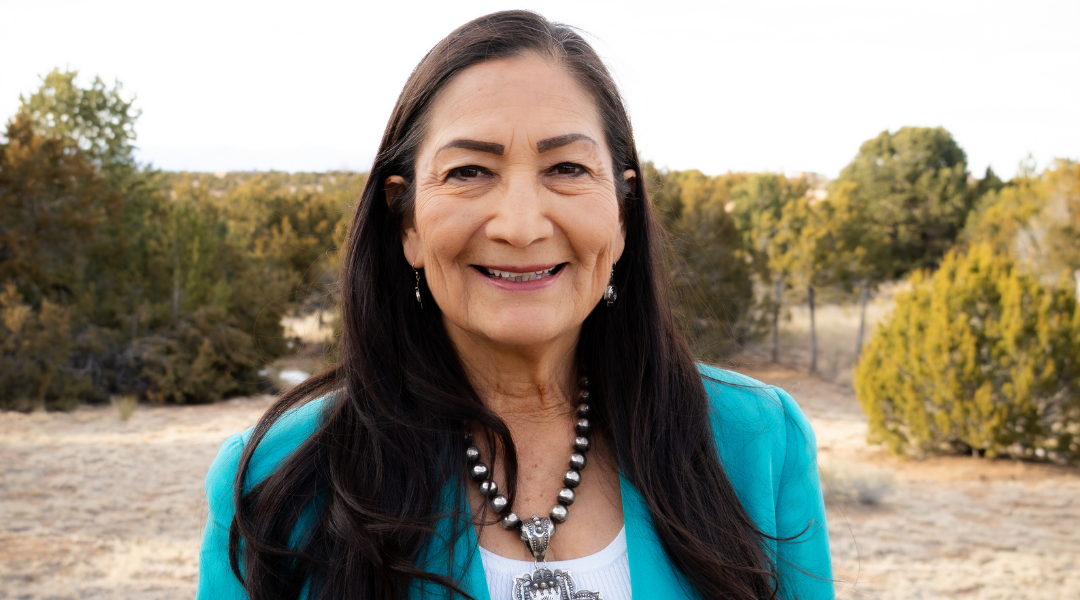
Last July, I ran into Deb Haaland at the Dallas airport, and we ended up having one of those short, rushed conversations between flights that ended up sparking something bigger. And this episode is what came out of it.
I was actually on my way to Montreal that time to speak at a conference about leadership, coalition building, and how we move from evidence to impact. After my brief chat with Deb, I realized that so many of the questions I was exploring are really the questions that have come up throughout Deb's career.
So rather than a traditional campaign interview, Deb and I talk about women in leadership, the gender bias women face running for office, and what it takes to challenge the status quo while staying true to yourself.
Deb's actually been on the show before, back when she was chairing the Democratic Party of New Mexico. A lot has changed since then. She's served in Congress, run the U.S. Secretary of the Interior's office, written her memoir, A Voice Like Mine, and is now the Democratic nominee for Governor of New Mexico. It’s a role no Native American woman has ever held in this country's history.
Watch my interview with Deb Haaland
Stepping Forward Before You Feel Ready
There’s a moment in our conversation where we talk about what might have surprised her younger self about the path ahead.
And what becomes clear is this: none of it was mapped out. There wasn’t a straight line into leadership. No clear invitation.
What there was, instead, was a willingness to notice opportunities and move toward them. To lift her head, see what was in front of her, and walk through the door, even when no one was pointing to it.
She wasn’t recruited into most of the roles she’s held. She chose them because she could see what was needed and trusted that she could do something about it.
“I wasn't one of the candidates who was ever recruited to do anything. I was recruited to go to Emerge New Mexico, very grateful for that. I wasn't recruited to run for lieutenant governor. I wasn't recruited to run for state chair. I wasn't recruited to run for Congress. I decided to do all those things on my own, because I felt I knew what our state, what our party needed, and so here I am.” - Deb Haaland
That’s a different model of leadership than the one many of us have been taught.
Not waiting to be chosen. Not waiting to feel fully ready. But stepping forward from where you are.
✨ The Well Woman Principle: Self-trust is how we know and sometimes knowing begins with paying attention. To what’s needed, to what’s opening, and to the quiet sense that you’re meant to step into it.
Leadership You Don't Need Permission For
Deb's approach to leadership doesn't look like most of what we're shown in politics or in business.
"You pretty much need to listen more than you talk sometimes." - Deb Haaland
She described bringing people who disagree into the same room; not to force a quick resolution, but to let the friction between them do the actual work of moving an issue forward.
She calls it the power of convening, and she credits that approach with creating space for perspectives that might otherwise go unheard.
It's not a leadership technique she picked up in a workshop or borrowed from a book. It's a habit built over a lifetime of having to listen closely just to be heard herself, in rooms that weren't built with a Native woman in mind.
She also had no patience for the idea that leadership requires some kind of official credential before it counts.
"If they're thinking about leading, they're probably ready to lead. Leadership isn't something you take a class in and graduate a leader. These are skills you develop from the time you're a child." - Deb Haaland
That idea alone reframes what leadership development can look like for women who've never seen themselves reflected in the traditional path to power.
Leadership, according to Deb, isn't something granted from above. It's something you're already practicing, whether or not anyone's handed you the title for it yet.
✨ The Well Woman Principle: Impact is how we serve, and it rarely comes from being the loudest person in the room, it comes from staying in it long enough to listen. Self-trust is how we know, and Deb's answer is a reminder that permission was never the requirement, you already have what leadership takes.
The Bias That Doesn't Hide
I've heard from so many women leaders that they’re expected to be collaborative but decisive, warm but tough, confident but never too confident, an impossible, contradictory standard nobody hands to men. So, I asked Deb if that resonated with her own experience.
She didn't hesitate.
"There's a lot of gender bias in New Mexico if you're running for public office. It's clear. It cuts like a knife. And people don't try to hide it." - Deb Haaland
A record that would settle the question for most candidates doesn't settle it for her.
She has to make her case again, and again, in ways her male colleagues simply don't have to.
That's not incidental detail in her story; it's part of the same lived experience that shaped how she leads today, and it's part of why representation in public office still matters as much as it does.
✨ The Well Woman Principle: Self-trust is how we know, and knowing what a system has cost you and saying so plainly, instead of absorbing it quietly, is its own act of self-trust. The room's agreement was never the requirement.
Pueblo First, Title Second
Before any of her professional titles, Deb leads with something else entirely, something that has nothing to do with an election cycle.
"I'm a Pueblo woman first. That's how I show up. I bring that perspective with me." - Deb Haaland
It's not a line crafted for a stump speech. It's the foundation everything else in her leadership sits on top of.
Her version of leading was never going to look like the standard political model, because she was never leading as a filed-down, more palatable version of herself.
✨ The Well Woman Principle: Joy is how we sustain, and joy often starts with the relief of showing up as your full self instead of performing a version of leadership you were told was more acceptable.
What She Carried Before Any of the Titles
Deb has known what it's like to stand on the other side of the very systems she now helps run
"I know what it's like to not thrive. I know what it's like to live paycheck to paycheck, to have a dollar in my bank account." - Deb Haaland
That part of her story doesn’t always take center stage, but it explains everything else about how she governs.
When she talks about childcare policy or a living wage, she isn't reciting talking points. She's speaking from memory; from a version of her own life most career politicians never had to live.
The Hot Bath in the Middle of a Campaign
Even in the thick of a governor's race, with her name on ballots and headlines, I asked Deb what living a well woman life looks like for her.
Her answer had nothing to do with strategy or optics.
"Taking time for yourself, taking a hot bath every now and then, sinking into a book that you've been meaning to read, giving yourself the time you need to nurture your own self." - Deb Haaland
It's easy to assume that the more public a person's life becomes, the more curated their idea of wellness has to be too. Deb's answer pushes back on that.
Living a well woman life, for her, isn't a bigger gesture or a five-year plan; it's giving herself permission to want the small, unglamorous kind of care, and protecting it even when a hundred other things are asking for her attention.
✨ The Well Woman Principle: Ease is how we lead, and ease isn't what's left over once ambition has been satisfied; it's what makes that ambition sustainable in the first place. Even the people carrying the most public weight need somewhere private to set it down.
Deb Haaland's leadership didn't begin the day she won an election, and it isn't only found in her titles. It began years earlier, through doors she walked through without waiting to be invited, in the rooms where she had to prove herself over and over, and in the identity she refused to set aside just to make other people more comfortable.
That's what leading from lived experience really means once you sit with someone who's actually lived it: not a campaign slogan, but a direct, traceable line from what a woman survives to how she chooses to lead.
Below is the full transcript of our conversation, lightly edited for clarity.
Meet Deb Haaland
Giovanna Rossi: I'm speaking with Deb Haaland. Welcome to the Well Woman Show.
Deb Haaland: Thank you. Happy to be here.
Giovanna Rossi: So, the last time we sat down together for this show, you were head of the Democratic Party of New Mexico. And since then, you've served in Congress, become Secretary of the Interior, written a memoir, and now you're running to become New Mexico's next governor. And a few weeks ago, we happened to run into each other at the Dallas airport. We had one of those classic airport conversations before rushing off to our flights.
Giovanna Rossi: I was actually on my way to Montreal to speak at a conference about leadership, coalition building, and how we move from evidence to impact. And afterwards, I realized that so many of the questions why I was exploring are really the questions that have come up in your career.
Deb Haaland: Thanks.
Giovanna Rossi: So today, rather than a traditional campaign interview, I really wanted to talk about leadership, systems change, and what it takes to challenge the status quo while staying true to yourself. So, let's get into it. The first question I want to ask you, Deb, is can you tell listeners who are you in the world today? Who's Deb Haaland?
Deb Haaland: Thank you so much. Well, first of all, I'm a Pueblo woman. I'm also a mom. That's very high on the list as well. I'm a mom, a proud mom, proud single mom of a non-binary child. I'm a sister. I'm an auntie. I'm a grandma. I'm a dog owner. My dog, Zia, looks up to me and relies on me for the things that she needs. And of course, I'm a former Congresswoman, former Secretary of the Interior, and Democratic nominee for Governor of New Mexico.
Deb Haaland: I would also say that I am a New Mexican with deep roots in this state. But a person who loves everything about this state, our landscapes, our green and red chili, our you know all the things. Our kids, our cultures, traditions, our history, right? Some of these things are tough to write. Not everything's perfect in New Mexico, but I take it as it is and think that I'll work hard to help make the positive changes that might be possible.
Early path to leadership & stepping into opportunities
Giovanna Rossi: Yeah, and if you could sit down with the Deb before you ran for Congress, about 10 years ago, what would surprise her most about the journey ahead?
Deb Haaland: I would say that, unexpected would be a word that I suppose I would use, right? I wasn't a kid who dreamed about being in Congress, or being a governor, or, you know, I didn't even know what a politician was. My parents, they didn't raise me like that. I was a military kid. And a res kid for the summer sometimes, right? But I guess I would tell myself to lift your head up to see the open doors and go through those doors for the opportunities that you'll have. And I mean, I was cognizant of that.
Deb Haaland: And I also want to say this too, that you know, I wasn't one of the candidates who was ever recruited to do anything. I was recruited to go to Emerge New Mexico, very grateful for that. I wasn't recruited to run for lieutenant governor. I wasn't recruited to run for state chair. I wasn't recruited to run for Congress. I decided to do all those things on my own, because I felt I knew what our state, what our party needed, and so here I am.
Writing her memoir & recognizing lived experience as leadership
Giovanna Rossi: Okay, and we're gonna get into more on that and your leadership, but I do wanna just say, you wrote a book recently that was published. It's your memoir, A Voice Like Mine. And writing a memoir really asks you to revisit your life in a very intentional way. So, I want to ask you, what did writing this book teach you about yourself?
Deb Haaland: I essentially wrote a bunch of different stories. And then, those eventually all came together in the book. What did it teach me about myself that, that I had like a fuller life than I thought I had, right?
Deb Haaland: Sometimes you don't think about all the things that you've done in your life. You might think what you did a couple of weeks ago and, oh, yeah, ten years ago I did this or that. But as I sat down to think about where did I get these leadership traits and what did I really learn from my parents and from my first job? And from my, you know, high school history teacher. It was kind of like I revisited so much of so many of my experiences and realized that I had really done a lot more than I sat down to realize.
Giovanna Rossi: Okay. And Deb, one thing I've noticed over 10 years of hosting this show is that my guests all have something in common. Whether they're in government, business, healthcare, science, the arts, it doesn't matter, they're all challenging the status quo in some way. That's kind of the common thread for my guests on this show. So, looking back over your own career, what status quo have you found the hardest to challenge?
Challenging the status quo & Deb’s leadership style
Deb Haaland: When you challenge the status quo, you need to get people to help you, because nobody accomplishes anything alone. So, you have to get people who trust you and believe that your ideas are sound and that they're doable, right? I'll give you an example. When I got to the Secretary of the Interior's office, our public lands, they have a multi-purpose mandate, so we have to do a lot of things with our public lands. That is a mandate from Congress, and so, you know, you have to think about that when you're in those management plans and so forth.
Deb Haaland: When I got there, it was seemingly one industry that was really being paid attention to on our public lands. And we said, conservation should be one of the uses in the multi-use purpose for a public lands. And so, we decided to rewrite the rules and that's kind of a challenging of the status quo, right? You could just go along and let that one industry dictates the things that you do in the department, but we said that we should give conservation a chance, and that's what we did.
Giovanna Rossi: Yeah, that's a great example. And I want to talk a little bit about leadership, and obviously you're running for governor, and New Mexico has had women governors before, so I don't think anyone questions whether a woman can lead this state. But we do seem to have fairly fixed ideas about what leadership is supposed to look like. Some leaders are highly visible and outspoken, others are quieter, more collaborative, or more deliberate. How would you describe your own leadership style?
Deb Haaland: So, I explored that, you know, I thought about this, too, when I was writing my book, right? What kind of leader am I, and what does leadership really mean to me? And when I got to the State party when I chaired the State party, we had lost terribly in 2014. Our party was in debt, and I ran for office, and I said, I believe I know what our party needs. And so, I won and I became the state chair of the Democratic Party of New Mexico, and I told myself, I will do anything that needs to be done if that means that we're going to succeed.
Deb Haaland: So, I did everything that needed to be done. If the bathroom needed cleaning, I cleaned it. If the floor needed mopping, I mopped the floor. I would make fundraising phone calls from my car in the parking lot of my job, on my lunch hour. I would do whatever needed to be done to make us successful.
Deb Haaland: And I feel like, you know, from that experience, I felt like, leaders for me, you have to be the role model for everyone else. I want to be in the mix with my colleagues, making sure that we are all working forward, that we're all, you know, locking arms and moving forward in the things that need to get done. So, I think that I'm very collaborative. I want to get people's input before decisions are made, because if there are decisions that affect communities and various people, then they need to know what's going on. So, we should operate in a transparent manner, have these conversations, make sure people have input so that they can be happy with the end result.
Deb Haaland: So, I think that I'm collaborative. I think that I work hard, and I believe that I, you know, that I just want to make sure that we listen more. I mean, you pretty much need to listen more than you talk sometimes.
Giovanna Rossi: Oh, yes, I love that. I love that you brought that up because that is not what most people do. And I think when people think of leadership, sometimes the mainstream idea about leadership is a lot of action and a lot of loud, you know, orders and giving people orders and all this. But I think, and I don't know the guests on this show and this community really understand that listening is leadership, because if we don't listen, you know, we're only listening to our own voice.
Giovanna Rossi: And so, thank you for bringing that up. I know some folks think listening is sort of passive, but I've seen you over your career really listen to communities, listen to tribal leaders, listen to scientists, advocates and people whose voices aren't always heard. And when you do that, what is your process then? Like, okay, listen, gather all the information, then how do you go and make impact from there?
Making Impact (why listening is leadership and the power of convening)
Deb Haaland: Yeah, I mean, you know, some decisions are easy, because everyone wants this, you know, they want the same thing. Other decisions are difficult, because you have folks weighing on each side of the issue, right? And so, I think part of leadership, too, is bringing those sides together and bringing those folks who don't always agree on things. You know, using your power of convening to bring people together so that they can talk. Right?
Deb Haaland: I did that. I was in, you know, we had a lot of funding to spread around for abandoned mine lands and orphan oil and gas wells when I was Secretary of the Interior. We brought labor unions and elected officials together in one of our southern states. Two entities that had never really spoken before and I brought them all together in a room, and they thanked me in the end. They were like, wow, we didn't realize that we should have been talking all along.
Deb Haaland: And so, I feel like as a leader, your power of convening can be a powerful tool in moving issues forward. And so, I think that we have to get people talking. There's too, you know, when you send an email to someone, you might take it the wrong way, right? There's a word in there you didn't like. There was an exclamation point you didn't like. You didn't really know what they meant.
Deb Haaland: If you're together in a room and people are actually talking face to face. It makes a big difference in how those ideas are conveyed and how feelings are put forward. So, I just feel like the power of convening is something that's really important to me. And, if I'm the next governor of New Mexico, I'll likely, seek to use that.
The Gender Bias of Running for Office
Giovanna Rossi: Yeah. Well, one thing I hear Deb from women leaders all the time is that they're expected to be collaborative but decisive, compassionate but tough, confident but not too confident. It can feel like an impossible set of expectations. Has that resonated with your own experience?
Deb Haaland: Absolutely. There's a lot of gender bias in New Mexico if you're running for public office. I'll just say it like that. It's clear. It cuts like a knife. And people don't try to hide it.
Deb Haaland: Add on to that, that I've been the first in a lot of these, offices, right? We've never had a Native woman Governor in the history of our country. We've never had a Native American governor in New Mexico. We didn't have a Native woman in Congress until me and Cherise Davids won. So, I mean, it's like the women, in my experience, you have to prove yourself over and over and over again. I have a long list of accomplishments.
Deb Haaland: I could hand you a long list of all the things that I've accomplished as a member of Congress, because I was a bipartisan. I was the most bipartisan member of my class, and I got bills passed and signed into law. I could give you a list of accomplishments from, moving a clean energy transition forward for our entire country, to taking two species off the endangered species list because we helped to recover them and their ecosystems. But yet I have to prove myself over and over and over again.
Deb Haaland: And I think that, that's unique among women candidates. So, I applaud every single woman candidate in New Mexico who wins their elections because it's harder for them, than it is for their male counterparts. I'm almost sure of that.
Indigenous values & lived experience shaping leadership
Giovanna Rossi: Yes. Well, and I'm curious because I think we can lump like all women in one bucket and all men in another, but actually there are clearly some other factors and influences. And I'm curious how indigenous values or traditions have influenced your approach to leadership and decision making.
Deb Haaland: Absolutely. Well, as I mentioned, with the first question you asked, I'm a Pueblo woman first. That's how I show up. I bring that perspective with me. I bring the perspective of, you know, going down to my grandfather's cornfield with him, helping him irrigate, working the land. I bring the perspective of being raised in a military family. My dad was a career Marine. He was in Vietnam for two solid years.
Deb Haaland: My mom was a public servant, a civil servant at the Bureau of Indian Affairs. We traveled and changed schools. I went to 13 schools before I graduated from high school. I mean, these are all things that I bring with me. So, I understand completely what military families go through. When I have the veterans caucus or a group of military people tell me, look, we got transferred here. My wife has her license for this medical profession in another state. It'd be great if she could just get a job here in New Mexico while I'm stationed here. I completely understand what that's like.
Deb Haaland: I know what it's like for students to understand things from the perspective of their indigenous language as opposed to, you know, English being their first language. I understand a lot of things, I know what it's like to be for students who have single parents, right?
Deb Haaland: So, I feel like I just, I know what it's like for a lot of people here in New Mexico, and, so I bring that perspective with me to every table, and I try to understand what those folks are going through. And how can we make our state a better place so that they can all thrive from their different communities and their different circumstances.
Giovanna Rossi: Yeah, terrific. And you brought up some sort of really complex issues before in terms of like listing off your accomplishments and having to, sort of prove yourself over and over. And one of the things I've been really exploring in my own work is how change happens inside complex systems.
Giovanna Rossi: And we often assume change comes from one charismatic leader or one brilliant idea, but it's usually much messier than that. And it's about relationships, and trust, and timing, and coalition building, and persistence. And so, how is your understanding of how change happens, evolved over the course of your career?
How change happens inside complex systems
Deb Haaland: How is my understanding of how change happens? I mean, change can be very slow, right? And that's another thing I bring. I learned a lot of patience when I was a kid, so I feel like I can be patient with things. And I think people want change, right? People want change, I'll tell you. We broke records for voter turnout in this midterm primary election.
Giovanna Rossi: Yeah.
Deb Haaland: When people want change, and you have people to motivate them on how to achieve that change, then they're motivated to find a way to make the change happen. So, I feel like, you know, elections are part of that and maybe that's why, I've been so adamant about people getting registered, underrepresented communities being registered to vote and voting because they deserve to have voices in our politics and that change that you talk about.
Giovanna Rossi: Yeah. As a policy leader and an elected official and an appointee. You've had to make big things happen, like, big changes. And a lot of times, that's what gets the attention or the headline, but actually, implementation of those changes is often where people's lives actually change. And so, I'm interested to know how you see that difference like making the big change happen, but then actually implementing it, is a whole other piece of the process.
Deb Haaland: Yes, it is. And so, you need people on both ends, right? You need people if you're getting a bill passed. You need all the staff. The legislators, all the folks in leadership in Congress and in the Senate to get the bill passed, and then, once it's signed into law, then handing it off to another set. Once it becomes law, then it's up to another branch of government, in fact, to implement that law and to make sure that it's being addressed properly.
Deb Haaland: And so, I mean, public servants are important. And federal civil servants are important. And I'm heartbroken over this president who came in so abruptly and just fired tens of thousands of people. A lot of my former colleagues who work so hard to manage our public lands and all of the other things that the Department of the Interior does.
Deb Haaland: I suspect that it might be a little bit harder now to get some of those changes implemented. But if we're thinking about here on a state level, right, the legislature passes a bill and then State workers diligently ensure that we're doing what we need to do.
What it means to truly thrive
Giovanna Rossi: Yeah. Okay. And your campaign, Deb, you talk about creating a future where everyone thrives, and I love that. I talk about people thriving on this show a lot, but it means different things to different people, and I just wonder, what does thriving mean to you? Not just as a campaign message, but as someone who has served in government and seen how policy affects everyday lives.
Deb Haaland: Yeah, and I would say as, you know, living my life from paycheck to paycheck. It's kind of like, yeah, people need to thrive, right? Thriving means that a child going, you know, starting out in school, or let's start from the beginning, universal child care. Thriving is a child being cared for in the best possible way so that the parents can go off to work and not worry about their child while they're at work, so they can earn a solid paycheck with benefits and ensure that that child has everything they need, right?
Deb Haaland: And then when the child goes to preschool that they're getting the best head start possible. So, by the time they get to kindergarten, they've already learned school etiquette. They're ready to start learning because they've had that, that head start in preschool. I saw this with my own child and I believe so wholeheartedly in education.
Deb Haaland: And I think that if we really want to thrive as a state, that education is a priority for us. Making sure kids can read sooner so that we can have more children confident about their learning, about their ability to learn in the grades that they'll go through. And then graduating more students from high school.
Deb Haaland: Not only with the ideas of attending college with all their tests and everything under their belt, but kids who also feel like, yeah, a four-year college degree isn't for me. I want to be an electrician or a plumber or a carpenter. So having had that training too, and handing them off to a paid apprenticeship program with one of our labor unions. I mean, these are all things that can help us to thrive, right?
Deb Haaland: Knowing that our kids are in good hands, that they have opportunities, that we can put a little more money in the pockets of the parents by enhancing our child tax credit or a working family’s tax credit, making sure that New Mexicans have a raise and making sure that every New Mexican has health insurance, a public option for health insurance, right? Those are ways to thrive.
Deb Haaland: I know what it's like to not thrive. I know what it's like to live paycheck to paycheck. To have a dollar in my bank account and I needed to put gas in my car and get to work. I know what it's like to have to go into forbearance with my student loans because I didn't have the money to pay them. And that's why I'm still paying them off now. So, I mean, these are all things that I think state government can help with. And federal government can help with, too.
Deb Haaland: And so, it's getting the right people. For me, everything circles back to politics, getting the right people who are in decision-making positions to say, yes, we care about New Mexicans. We want to make sure that they have these things, right? Student loan repayment programs for one.
Giovanna Rossi: Yeah, so I think that we just heard a pretty thorough list of the things that you'll be focused on if you become governor in 2027. And so, Deb, I want to ask you, many of our listeners are leading in their own communities through businesses, nonprofits, schools, healthcare, government, and even in their own families. And what would you say to listeners who want to challenge the status quo, but they wonder whether they are really ready to lead?
Advice to women who want to lead
Deb Haaland: Well, if they're thinking about leading, they're probably ready to lead, right? I mean, leadership isn't something that you, you know, you don't take a class in leadership and then you graduate from that class and you're a leader. These are skills that you develop from the time you're a child. Your parent, you know your mother, giving you the potato peeler and saying, peel all these potatoes, and you're gonna help me cook dinner. It's kind of like you learn skills, right? From the time you're a child to the time you are an adult.
Deb Haaland: And I want more people to trust themselves. To have the courage to step out. It's scary to put yourself out there, there's no doubt about it, but I want people to recognize that you get used to it. It might be scary, you might not feel you have the courage, but do it, and you'll learn the ropes. You'll get used to it. My guess is that all of those people you're talking about, they have the skills to be leaders in their communities. And we need them. We need them to step up and start helping to make the decisions that will make people's lives better.
Giovanna Rossi: Absolutely. Thank you for saying that and talking about trusting ourselves, because I think that is, well, I know that is something we talk a lot about on this show, is really supporting women to trust what they already know. And it's just a matter of some people don't see themselves as a leader, but with some encouragement and mentorship and people like you saying, go for it, I think more women will step up and lead.
Giovanna Rossi: And so, Deb, just as we're wrapping up, I wanted to ask you, since you're on The Well Woman Show, what does living a well woman life mean for you?
What living a well woman life means
Deb Haaland: It means, taking time when you need it. Getting exercise, eating right, you know, don't eat junk food every day. I have a little passion for sweets once in a while. I try to balance that out with salads and things that are healthy. But it's also, you know, taking time for yourself, taking a hot bath every now and then, sinking into a book that you've been meaning to read, and giving yourself the time you need to nurture your own self. I know things can be so terribly busy, you're just rushing from one thing to the next, and trying to fit everything in your schedule.
Deb Haaland: And so, I just think it's important for us to, even if it's a few minutes, to sit on the floor and do some yoga stretches, or go for a walk around the block. And, you know, take your kids with you. Children love being outdoors. For me, I loved spending time with Soma, and so family time was always a welcome wellness thing for me.
Giovanna Rossi: Yeah, thank you for all those insights and tips. And Deb Haaland. Is there anything else you want to share with listeners today as we wrap up?
Deb Haaland: Yeah, thank you so much for having me. I just, you know, I have so much faith in the people here in New Mexico. I'm grateful, you know, I'm out there around the state. I've traveled statewide many times since I launched this campaign and many times for my other work that I've done. And there are amazing people all over this state, just doing all the hard things to make sure that people's lives are better. I'm so grateful for all of them and I just want to give a shout out to everyone who feels like someone isn't appreciating them, maybe. I appreciate everything that everyone does for our communities to make our communities a better place.
Giovanna Rossi: Deb Haaland, thank you so much for being on The Well Woman Show today.
Deb Haaland: Thank you.